President Martha E. Pollack and Dr. Jean William Pape, M.D. ’75, professor in clinical medicine at Weill Cornell Medicine, have been elected to the American Academy of Arts and Sciences.
Cornell Tech researchers have developed a mixed-reality driving simulator system that could lower the cost of testing vehicle systems and interfaces, such as the turn signal and dashboard.
A multi-year study of the role of E. coligut bacteria in Crohn’s disease finds that intestinal inflammation liberates chemicals that nourish the bacteria’s growth and promotes their ability to cause inflammation.
Adult vaccination rates and social determinants of health – the social and economic conditions in which families live and work – have played an important role in children’s mental health during the pandemic, according to a new study led by Weill Cornell Medicine investigators.
Abnormalities in a type of brain cell called astrocytes may play a pivotal role in causing some behavioral symptoms of autism spectrum disorders, according to a preclinical study by Weill Cornell Medicine investigators.
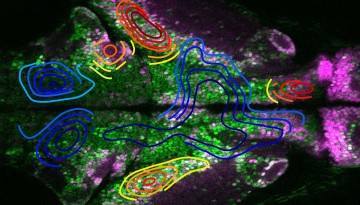
New evidence from a zebrafish model of epilepsy may help resolve a debate into how seizures originate, according to Weill Cornell Medicine and NewYork-Presbyterian investigators. The findings may also be useful in the discovery and development of future epilepsy drugs.
The center, with more than 120 faculty members, builds on the multidisciplinary nature of research into the immune system, with links between infection biology, vaccine development, genetics, genomics, malignancy and biomedical engineering.
Inhibiting an important signaling pathway in brain-resident immune cells may calm brain inflammation and thereby slow the disease process in Alzheimer’s and some other neurodegenerative diseases, a study by Weill Cornell Medicine investigators suggests.
Hysteroscopic sterilization, a nonincisional procedure, was found to be as effective as minimally invasive laparoscopic sterilization in preventing pregnancy, but both methods had higher-than-expected failure rates, according to a new study led by an investigator at Weill Cornell Medicine.