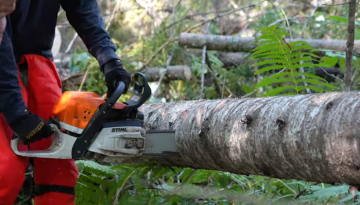
When storms leave Adirondack roads and trails blocked, Cornell Cooperative ExtensionHamilton County is helping communities access chainsaw safety training closer to home — improving how quickly and safely storm damage can be cleared.
The New York State Energy Research and Development Authority has awarded the College of Agriculture and Life Sciences $5 million to build solar arrays at university farms in Ithaca and the Hudson Valley.
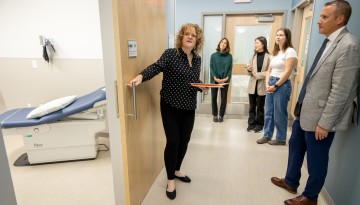
Eight Brooks School master's students in public and health administration are fellows in the Service to Service initiative, which connects veterans and military families with public policy schools and careers in public leadership.
Assisted by Cornell faculty and students, Tompkins County has launched a program to recognize businesses for efforts to welcome patrons across the age spectrum.
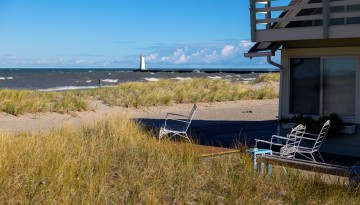
When a dune in Sodus Point, New York - built in 2021 to prevent flooding - grew so high some residents lost their view of the water, NY Sea Grant stepped in to ease tensions and facilitate a new maintenance plan.
Twenty startup finalists will pitch their food and agriculture businesses – and their potential to impact upstate New York – for up to $1 million at the Grow-NY Summit, Nov. 12-13 at the Hotel Canandaigua.