David Kimelberg, J.D. ’98, a member of the Seneca Nation, is helping Indigenous artists from around the world achieve recognition through his gallery in Buffalo, New York.
A $20 million gift from Andrew H. ’71 and Ann R. Tisch will foster engagement and collaboration between Cornell Tech and Weill Cornell Medicine, catalyzing new discoveries at the intersection of health and technology.
The continued sales growth of electric passenger vehicles will be having a greener, cleaner influence on air pollution in most metro U.S. regions, all the while reducing human death by mid-century.
Unrelenting climate change is leading to extended, late-summer weeks of water stratification, which prompts varying degrees of oxygen deprivation in lakes, says new Cornell research.
ProAgni was one of eight finalists to take home prize money during the Grow-NY Food and Ag Summit, held Nov. 15-16 at the Oncenter in Syracuse and virtually. The competition is funded by Empire State Development and administered by Cornell’s Center for Regional Economic Advancement.
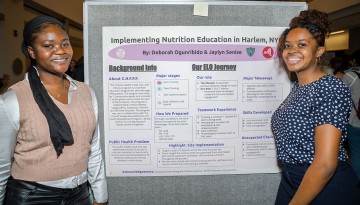
More than 100 students presented their work on a wide array of projects aimed at improving access to public health everywhere from Tompkins County to Tanzania, as part of the 2022 Global and Public Health Experiential Learning Symposium, held Nov. 11 in Cornell’s Physical Sciences Building.
Three startups – two helping to make a green economy and one creating next-generation microbial images – graduated Nov. 16 from Cornell’s Center for Life Science Ventures business incubator.
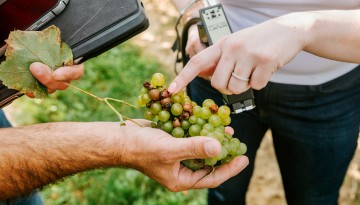
The robots will roll through vineyards and gather data to allow breeders and growers to evaluate their crop leaf by leaf, in real time, down to the chemical level.
Faculty from seven Cornell colleges have been named Engaged Faculty Fellows through the David M. Einhorn Center for Community Engagement, joining a network that is committed to advancing engaged teaching and scholarship at Cornell and in their academic disciplines.