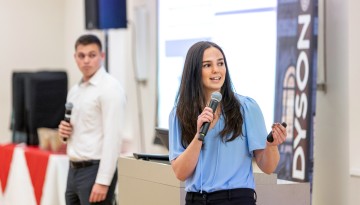
Students working to support local Indigenous heritage, dairy farmers, formerly incarcerated people and entrepreneurs in Uganda and Ithaca competed for a total of $7,500 in prize money that will fund their community collaborators.
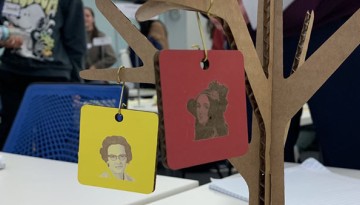
Students in Ithaca and New York City showed off their computer programming skills Saturday, March 4, solving problems with the theme of women’s achievements in computing, in the first of two high school computing contests…
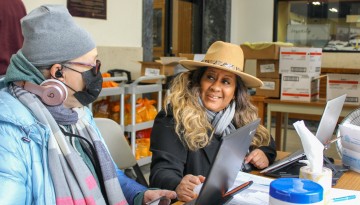
Cornell’s Project Leadership certificate through eCornell’s new Transform program offers working adults from underserved communities free access to Cornell online courses and certificates, with the goal of supporting economic mobility for all.
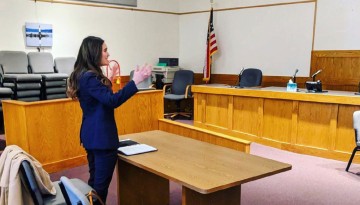
Now in its fourth year, the Tenants Advocacy Practicum at Cornell Law School continues to expand its impact as it works to bridge the housing justice gap in Ithaca and the surrounding counties. The practicum recently achieved a new milestone by recovering more than $100,000 for local tenants over the course of a year for the first time.
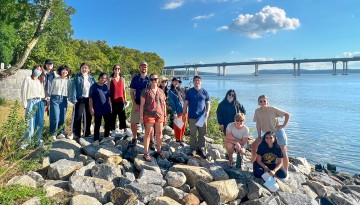
As sea levels rise over the next decades for low-lying Hudson River towns, Cornell landscape architecture students offered ideas for coping with climate change and embracing the water.
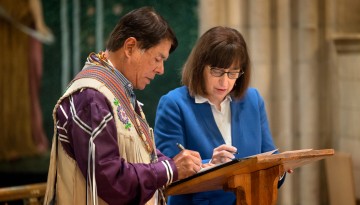
With apologies for causing harm and to right a wrong of history, Cornell returned ancestral remains that were kept on campus for six decades to the Oneida Indian Nation on Feb. 21.
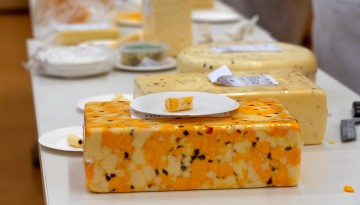
The inaugural Northeastern Dairy Product Innovation Competition is now accepting applications, providing an opportunity for producers of value-added dairy products to bring their innovations to market.
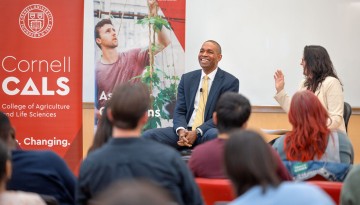
New York Lt. Gov. Antonio Delgado engaged with students and faculty on topics ranging from biological engineering to nutrition to 4-H programs during his first tour of the Ithaca campus on Feb. 2.
A new study finds that nest boxes of commercial eastern common bumblebees (Bombus impatiens) lead to the deaths of wild queens who are attracted to the brightly colored hives.