The professor of mathematics was named a fellow of the Institute of Mathematical Statistics during an Aug. 1 induction ceremony at the Joint Statistical Meetings/IMS Annual Meeting in Miami. (Aug. 16, 2011)
Alexander Kazimirov, a senior research associate, died of a heart attack Aug. 12 while hiking Algonquin Mountain in the Adirondacks. He was 59. (Aug. 16, 2011)
'To reflect on arXiv is to reflect on a research world transformed by a two-decade revolution in information technology,' says Paul Ginsparg in a Nature commentary piece published Aug. 11. (Aug. 12, 2011)
A company that moved to Ithaca to be close to Cornell's expertise is ready to market a vibration-based power source for wireless sensors. (Aug. 9, 2011)
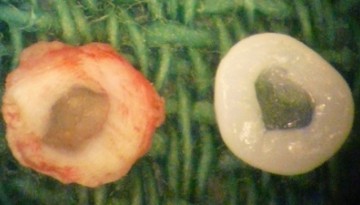
An interdisciplinary team of Ithaca and Weill Cornell researchers have created an artificial implant to replace intervertebral discs in the spinal column. (Aug. 1, 2011)
Today's online experience is really the experience of being part of a gigantic crowd of people, said Jon Kleinberg, in a lecture about what social media can teach us about ourselves. (July 25, 2011)
The Cornell campus teemed with high school-aged budding scientists and engineers during the College of Engineering's CURIE and CATALYST academies, which took place July 17-23. (July 25, 2011)
A newly approved standard for 3-D printing file interchange will greatly enhance 3-D printing capabilities, says Cornell's Hod Lipson, who led the development of the standard. (July 21, 2011)