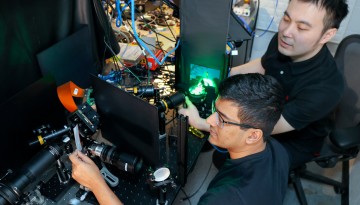
Cornell researchers have developed an optical neural network that can filter relevant information from a scene before the visual image is detected by a camera, a method that may make it possible to build faster, smaller and more energy-efficient image sensors.
New research from a multidisciplinary team helps to illuminate the mechanisms behind circadian rhythms, offering new hope for dealing with jet lag, insomnia and other sleep disorders.
Researchers have identified blood biomarkers that could help pediatricians quickly diagnose severe cases of COVID-19 as well as multisystem inflammatory syndrome, also known as MIS-C, which emerged during the pandemic.
Using a computational approach, material scientists at Cornell have found more than 20 new self-assembled crystal structures, which could serve as nanoparticle or colloid design targets for other researchers.
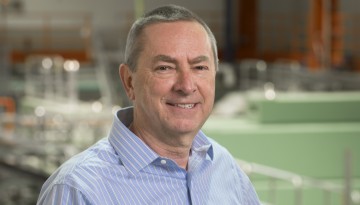
Nigel Lockyer, an accomplished physicist and laboratory leader, has been selected as the new director at the Cornell Laboratory for Accelerator-based Sciences and Education (CLASSE). Lockyer comes to Cornell with a wealth of experience in physics and accelerator sciences, having most recently served as the director of the Fermi National Accelerator Lab (Fermilab).
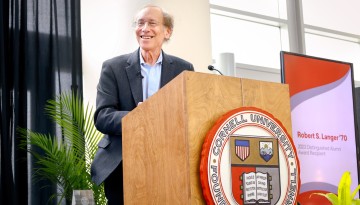
Robert Langer ’70, whose pioneering work in biotechnology, drug delivery and tissue engineering has made him one of the most prolific inventors in medicine, received the Cornell Engineering Distinguished Alumni Award during a celebration hosted April 19.
A new research project co-led by Cornell Engineering aims to unravel the physical limits of cell size in budding yeast, with the ultimate goal of learning more about how cells, the fundamental units of life, modulate size control during evolution.
Researchers used thermomechanical nanomolding to create single-crystalline nanowires that enable metastable phases that would otherwise be difficult to achieve.