Cornell professor Robert Howarth advised New York state senators last week to downsize the state’s natural gas pipeline system and to repeal laws that easily connect gas to new homes.
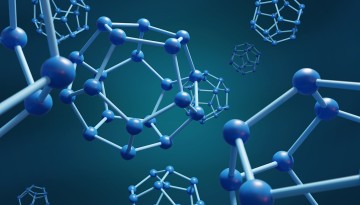
A Cornell-led collaboration has for the first time used voltage to turn on and off a material’s crystal symmetry, thereby controlling its electronic, optical and other properties – a discovery that could have a profound impact on building future memory and logic devices.
A Cornell engineering professor will play a major role in a new federally funded project to increase the domestic supply of minerals needed to improve and sustain green energy.
Using artificial intelligence, Cornell engineers have simplified models that accurately gauge the fine particulate matter in urban air pollution – exhaust from cars and trucks that get into human lungs.
A novel combination of artificial intelligence and production techniques could change the future of nanomedicine, according to Cornell researchers using a new $3 million grant from the National Science Foundation to revolutionize how polymer nanoparticles are manufactured.
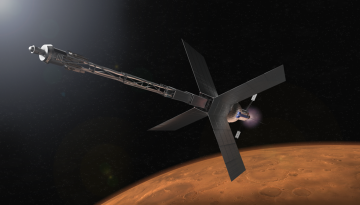
The Additive Vehicle-Embedded Cooling Technologies project at Cornell is being funded by NASA to advance the future of space exploration, including nuclear power-enabled missions.
A chemistry collaboration led to a creative way to put carbon dioxide to good – and even healthy – use: by incorporating it into a series of organic molecules that are vital to pharmaceutical development.
Cornell is leading a new $34 million research center that will accelerate the creation of energy-efficient semiconductor materials and technologies, and develop revolutionary new approaches for microelectronics systems.