Journalistic fact checks are a more effective counter to COVID-19 misinformation than the false news tags commonly used by social media outlets, according to new Cornell research.
A group of graduate students from Cornell is collaborating with students across the country to create a scholarly podcast focused on issues of diversity in archaeology.
Cambridge University Press called upon Derk Pereboom to write a definitive overview of research on the free will debate for its Philosophy of Mind Elements series, which provides succinct overviews of key topics.
The Cornell Center for Cultural Humility facilitates culturally responsive research, practice and policy that is inclusive across race, ethnicity, class and other markers of identity.
Jura Liaukonyte, associate professor at Dyson, and colleagues tracked ad viewership using tools that, instead of just monitoring the television, measured actual viewer presence in the room, and focal attention on the screen.
Employees or managers who view themselves as professional are more vulnerable to unethical behavior such as conflicts of interest, a new Cornell study finds.
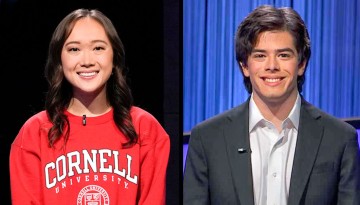
Andrés Quijano ’22 will compete at 7:30 p.m. on “Jeopardy!” and Catherine Zhang ’22 will compete at 8 p.m. on the “Jeopardy!” National College Championship, on ABC and Hulu.
Seven exceptional early-career scholars will be awarded three-year fellowships to pursue independent research in the arts and humanities, social sciences and natural sciences.
White men who have experienced disadvantages in the workplace – particularly when associated with a social identity, such as being gay or having a disability – are more likely to recognize disadvantages faced by others and to understand the privilege they enjoy as white.