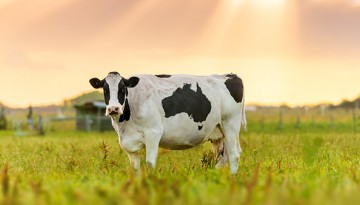
Cornell scientists have created the first vaccines that can prevent metritis, one of the most common cattle diseases. The infection not only harms animals and farmers’ profits but also drives more systemic antibiotic use on dairy farms than any other disease.
Five doctoral candidates and one postdoctoral associate at Cornell were recently inducted into the Cornell chapter of the Edward A. Bouchet Graduate Honor Society.
A $10 million grant from the National Institutes of Health has established a new Center for Reproductive Genomics that will connect reproductive scientists across Cornell.
Paul Streeter, assistant dean for finance and administration at the College of Veterinary Medicine, has been named Cornell’s new vice president for budget and planning, effective April 1.
The first study on vitamin D status and congestive heart failure in dogs suggests the same that vitamin D deficiency may be a risk factor for congestive heart failure in canines.
Robin Davisson looks back on her time at Cornell, and forward to new opportunities, as she and husband Cornell President David Skorton prepare to move in 2015.
With so few available academic jobs, Cornell will start a NIH-funded pilot program to help train life sciences graduate students and postdocs for nonacademic positions. A kickoff event is March 18.