Cornell is part of a new, multistate, $3 million U.S. Department of Agriculture grant to better understand how selectively breeding their herds to encourage milk production is reducing their fertility.
President David J. Skorton has been named the next secretary of the Smithsonian Institution, the world’s largest museum and research complex. He will continue all the duties and activities of his office at Cornell through June 30, 2015.
Cornell researchers have discovered a worm infecting U.S. cats for the first time. Their discovery is published in the Journal of Feline Medicine and Surgery.
Veterinarian Alfonso Torres is co-leading the charge to increase the number of veterinarians around the world who are familiar with animal diseases that could threaten the health of livestock and poultry globally.
A new study finds that a component of the sperm membrane tightly controls a crucial step in fertilization, making it a prime target for efforts to either assist fertilization or prevent it.
The College of Veterinary Medicine's Comparative Cancer Biology Training Program will offer competitive grants to cancer researchers across the university.
Cornell researchers are the first to show how horses with microscopic foreign objects in their eyes can benefit from in vivo corneal confocal microscopy.
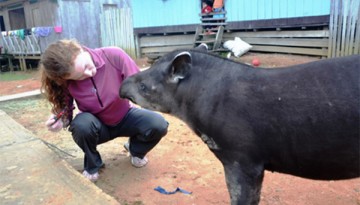
Cornell veterinary student Emily Aston ’15 went into the heart of the Amazon to conduct the most remote study to date of the foodborne and waterborne pathogen Toxoplasma gondii.
Dr. Yrjo Grohn, professor of epidemiology at Cornell’s College of Veterinary Medicine, has been honored with a lifetime achievement award from the Association for Veterinary Epidemiology and Preventive Medicine.