A new center at Cornell will fight the rise of antibiotic resistance, a global health challenge that threatens to reverse critical advances in modern medicine.
White-tailed deer – the most abundant large mammal in North America – are harboring SARS-CoV-2 variants that once widely circulated but are no longer found in humans.
Twelve Cornell and Weill Cornell Medicine faculty members – six of whom are also Cornell alumni – have been elected fellows of the American Association for the Advancement of Science, the world’s largest general scientific society.
The funding will support preliminary disease-related research, in the latest in a series of efforts to create new opportunities for interdisciplinary research.
The first recorded proof of a bird not seen for 140 years, a gut bacteria that could regulate cholesterol and a senior who risked his own life to rescue a man from an oncoming subway train were among the most-read Cornell Chronicle stories of 2022.
Twenty Cornell faculty members were awarded Affinito-Stewart research grants for the 2022-2023 academic year. The grants, which are awarded by the President’s Council of Cornell Women (PCCW), provide junior faculty members from across the university with up to $10,000 in research funding.
President Martha E. Pollack has established a task force to interrogate all aspects of the undergraduate admissions process and to recommend a universitywide admissions policy and best practices that will be guided by Cornell’s founding mission and can be adapted by the admissions offices of each school and college.
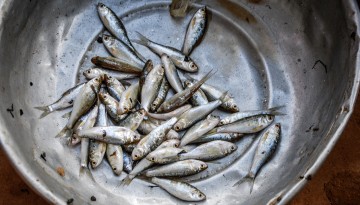
Inexpensive, small fish species caught in seas and lakes in developing countries could help close nutritional gaps for undernourished people, and especially young children, according to new research.