Former NYC police investigator Christian Saffran is beginning his first year in the Tri-Institutional M.D.-Ph.D. Program to follow his dream of becoming a physician scientist.
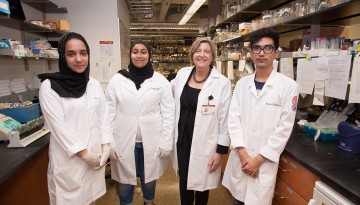
The Ithaca campus and Weill Cornell Medicine-New York welcomed three young guests recently: high school students from Qatar, visiting the United States for the first time to get a sneak peek into the world of academic medicine.
Quitting cigarettes may not improve smokers' lung function if they have already begun to develop chronic obstructive pulmonary disease, according to new research from Weill Cornell Medicine.
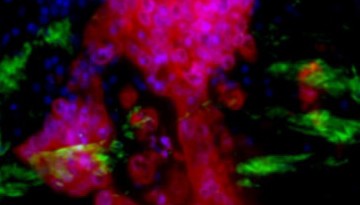
An enzyme that stimulates the breakdown of fats in immune cells helps trigger inflammation, or an immune response to pathogens, a new study by Weill Cornell Medicine researchers suggests.
Cornell researchers have helped develop a recellularized human colon model that could be used to track the pathogenesis of colon cancer and possibly gain insight into its spread to other organs.
The grant, awarded to four New York City medical centers, including Weill Cornell Medicine, aims to improve physicians' ability to prevent and treat disease based on individual differences in lifestyle, environment and genetics.
The Cancer Resource Center of the Finger Lakes hosted a Cancer Moonshot Summit June 29 to support a White House initiative to double the rate of cancer prevention, diagnosis and treatment.
Deborah Estrin, professor of computer science at Cornell Tech and professor of public health at Weill Cornell Medicine, has won a 2017 IEEE Internet Award for for contributions to internet technology.
The jury is out in terms of the effectiveness of high-intensity focused ultrasound to create prostate cancer, according to Weill Cornell Medicine researchers.