Cornell startup Antithesis Foods and Bactana were awarded NSF small-business grants, as Guard Medical raises $11 million in Series B investments and C2i launches a disease test in Europe.
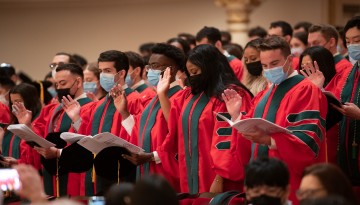
President Martha E. Pollack joined Deans Augustine M.K. Choi and Barbara Hempstead in conferring degrees on students graduating from Weill Cornell Medical College and Weill Cornell Graduate School of Medical Sciences, in the first in-person ceremony since the beginning of the COVID-19 pandemic.
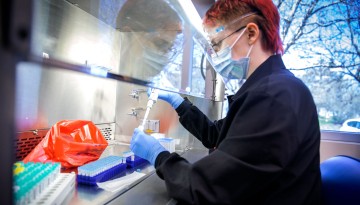
Robust collaboration between community partners and Cornell has resulted in more than 2 million COVID-19 tests, saving lives throughout the Finger Lakes region.
Charles R. Lee was one of the university’s most active and generous ambassadors, and a tireless advocate for deeper connections across Cornell’s campuses and alumni communities.
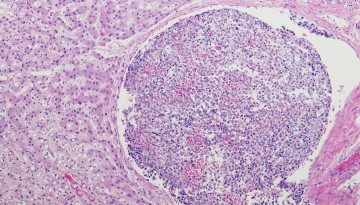
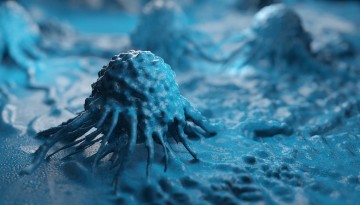
Tumors can force neighboring cells into supporting cancer growth by releasing lactate into their local environment, according to researchers at Weill Cornell Medicine. The findings pave the way for future drug treatments that thwart that defense mechanism to help cancer patients.
A protein called CDC7, long thought to play an essential role early in the cell division process, is in fact replaceable by another protein called CDK1, according to a study by investigators at Weill Cornell Medicine and the Dana Farber Cancer Institute.
An agricultural economist, a theoretical physicist, a plant biologist and a physiologist have each been elected to the National Academy of Sciences, the academy announced May 3.
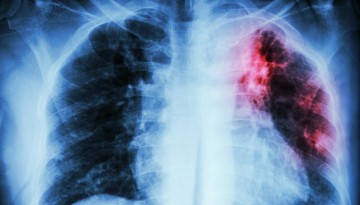
Weill Cornell Medicine researchers have identified a protein in Mycobacterium tuberculosis that contributes to drug tolerance, a phenomenon that allows bacteria to survive treatment with drugs that would normally kill them.