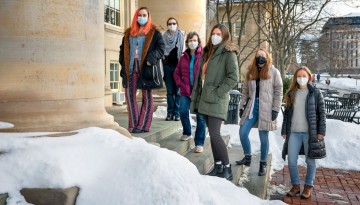
Vaccination Conversations with Scientists, a group of more than 100 Cornell scientist volunteers educating the public about vaccines, is reporting success in shifting unvaccinated people’s beliefs about the shots.
An FDA-approved drug that has been in clinical use for more than 70 years may protect against lung injury in severe COVID-19 cases, according to a preclinical study from researchers at Weill Cornell Medicine and Cold Spring Harbor Laboratory.
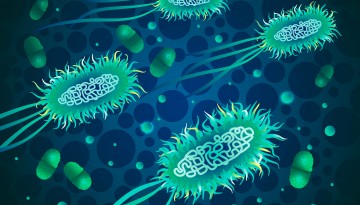
Scientists at Weill Cornell Medicine have developed a pipeline that will enable study of the biological roles of gut bacteria, recognized as key factors in health and disease.
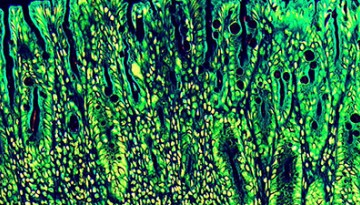
A growth factor protein produced by rare immune cells in the intestine can protect against the effects of inflammatory bowel disease, according to a new discovery from Weill Cornell Medicine researchers.
According to new research out of Weill Cornell Medicine, a protein that masterminds the way DNA is wrapped within chromosomes has a major role in the healthy functioning of blood stem cells, which produce all blood cells in the body.
Using an innovative new imaging technique, researchers at Weill Cornell Medicine have revealed the inner workings of a family of light-sensing molecules in unprecedented detail and speed.
Cornell's Office of Academic Integration has announced 15 new multi-investigator seed grants, including support for a project on climate change, pollen and asthma attacks and another to develop a microbial delivery system for a unique treatment of colorectal cancer.
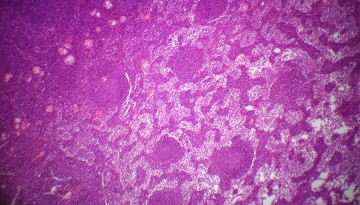
Cornell researchers have for the first time imaged the entire depth of the lymph nodes in a living mouse using three-photon microscopy, which enabled them to observe the dynamic interactions of immune cells.
By mapping all the protein interactions of a dementia-linked protein in the brain called Tau, a team of Weill Cornell Medicine investigators has created a road map for identifying potential new treatment targets for Alzheimer’s disease and related dementia.