The grant will fund a Weill Cornell Medicine-based program known as REACH: Research Enterprise to Advance a Cure for HIV, which was formed in late 2020.
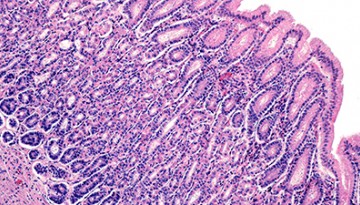
Eating fructose appears to alter cells in the digestive tract in a way that enables them to take in more nutrients, according to a preclinical study at Weill Cornell Medicine and NewYork-Presbyterian.
A study involving researchers from the College of Human Ecology and Weill Cornell Medicine estimates the incidence of elder mistreatment in New York state and advances understanding of key risk factors.
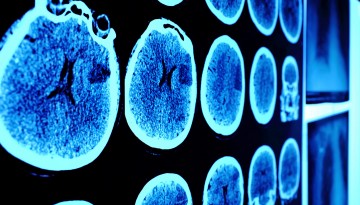
The degree to which the brain’s wiring aligns with its patterns of activity can vary with sex and age, and may be genetic, suggests a Weill Cornell Medicine-led study, which also finds that this alignment may have implications on cognition.
Researchers at Weill Cornell Medicine have shown the ability to record the high-speed motions of proteins while correlating their motion to function, which should allow scientists to study proteins in greater detail than ever before.
Dr. Geraldine McGinty, an esteemed clinical operations strategist, administrator and radiologist, has been appointed senior associate dean for clinical affairs at Weill Cornell Medicine, effective Sept. 1.
The autoimmune disease lupus may be triggered by a defective process in the development of red blood cells (RBCs), according to a study led by researchers at Weill Cornell Medicine. The discovery could lead to new methods for classifying and treating patients with this disease.
A new strategy for developing vaccines against cancer showed promise in a proof-of-concept study led by scientists at Weill Cornell Medicine, NewYork-Presbyterian and Heidelberg University Hospital.