To help launch the new Cornell Center for Immunology, world-renowned immunologist Mark Davis was in Ithaca to give a talk and meet faculty and students.
A transformative new scholarship program established by Weill Cornell Medicine will eliminate medical education debt for all students who qualify for financial aid, the institution announced Sept. 16.
A new Android app developed by Cornell Tech researchers and collaborators will make it easy for people to collect their personal health data and share it with trusted medical providers or apps.
The drawn-out process for diagnosing Lyme disease could become a thing of the past – good news for the thousands of people each year who get the tick-borne illness.
Sturt Manning, Nancy Green and Nicole Milano have received grants from the National Endowment for the Humanities for field research, cultural heritage and preservation projects.
A new Cornell study presents a technique to identify viruses and bacteria in the human body and quantify injuries to organs by using dead fragments of DNA, called cell-free DNA, that roam throughout the bloodstream and urine.
Three collaborative New York City-based projects, designed to inspire cross-campus research partnerships, have been awarded grant funding totaling approximately $500,000 from the College of Agriculture and Life Sciences.
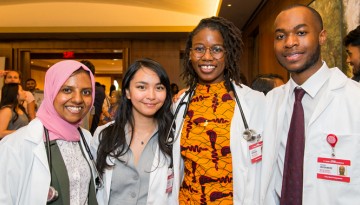
Weill Cornell Medicine’s 106-member Class of 2023 was sent off to medical school Aug. 20 with the annual White Coat Ceremony that officially marks the beginning of graduates’ medical education.
Mildred Warner, M.S. ’85, Ph.D. ’97, professor of city and regional planning, has secured a $500,000 grant from the USDA to extend her work on multigenerational planning in rural areas.