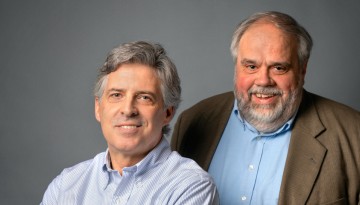
Professors Michael Heise and Marty Wells discuss how they collaborate on empirical legal research, applying advanced data science and statistical analyses to look at legal issues that affect people’s lives as well as examining the judiciary system and how it operates.
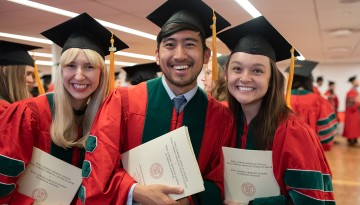
The Executive M.B.A./M.S. in Healthcare Leadership, which combines a master’s from the Weill Cornell Graduate School of Medical Sciences with an MBA from the Johnson school, graduated its inaugural class in May.
Cedric Jimerson ’40, M.D. ’43, who turns 100 on Aug. 7, was honored with other veterans from his home state of Pennsylvania at a ceremony in Harrisburg commemorating the 75th anniversary of D-Day.
A Cornell-led team has shown, for the first time, that intergenerational contact and education about the aging process and its misconceptions can reduce ageist attitudes, prejudices and stereotypes.
Ari Juels, a professor of computer science at the Jacobs Technion-Cornell Institute at Cornell Tech, has been named the Weill Family Foundation and Joan and Sanford I. Weill Professor – the first endowed professorship at the institute.
Four new faculty projects have been selected to receive funding for collaborative, cross-disciplinary opportunities for learning and research in New York City.
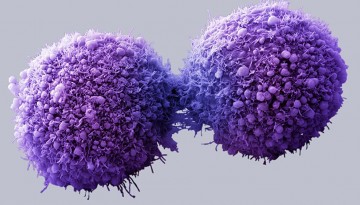
A powerful new set of scientific tools developed by Weill Cornell Medicine and New York Genome Center researchers enables them to track the molecular evolution of cancers.