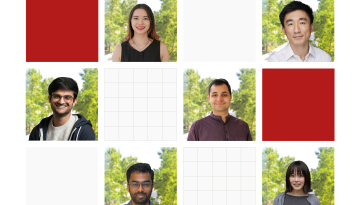
Six new faculty members will join Cornell Tech during the coming year, bringing expertise in AI, machine learning, programming languages, and operations research.
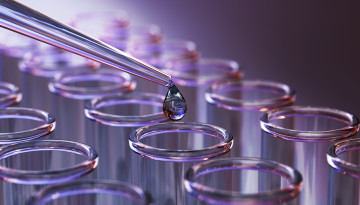
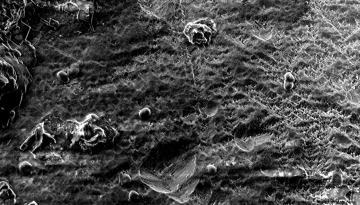
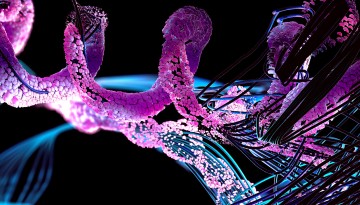
Researchers developed an ultrafast-dissolving nanofiber film that can deliver a cocktail of three drugs so quickly and effectively, 90% of the formulation is released in less than two seconds.
The mixing waters in the Labrador Sea, sandwiched between Greenland and Newfoundland, provides enough oxygen to sustain life throughout the deep North Atlantic Ocean.
The latest study from the Food Systems Countdown Initiative (FSCI) reveals the stark reality of where global food systems transformation stands: For most indicators on health, environment, livelihoods, governance and resilience, a vast majority of countries will not meet the internationally agreed 2030 goals.
Traumatic brain injury in Pakistan is associated with a high risk of death and disability long after the initial injury, even in mild to moderate cases.
A genetically engineered bacterium can rapidly break down one of Earth’s most abundant minerals, opening a promising new pathway for removing CO2 from the atmosphere and recovering critical elements, according to new Cornell research.
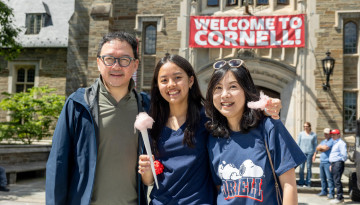
The 3,681 first-year students and 603 transfers who begin moving to campus Aug. 17, hail from 49 states plus Washington, D.C., Puerto Rico and American Samoa, and 62 countries.
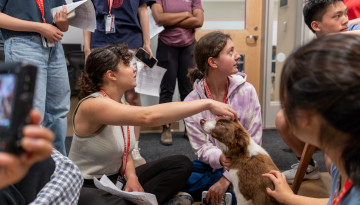
Through a partnership between Cornell’s School of Continuing Education (SCE) and 4‑H, high school students from across New York state receive scholarships to Cornell’s Precollege Studies program and take Cornell courses for credit on campus or online during the summer.
Using a photochemically driven labeling technique, a Cornell-led research group has devised a way to capture cancer-specific protein-to-protein interactions, which could spawn targeted therapies for prostate and other forms of the disease.