Cornell Cooperative Extension Harvest New York runs the Community Gardens Soil Testing Program, which offers free test results and advice to home gardeners anywhere in the state.
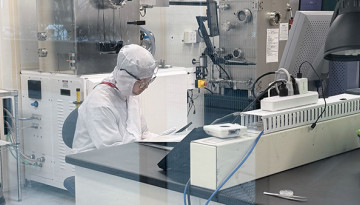
Weill Cornell Medicine investigators have revealed the detailed workings of a cell membrane protein; the discovery could lead to new therapies for blood coagulation disorders, cancers and other conditions.
Behavioral health clinicians at 911 call centers answer mental health and substance abuse calls, enabling police officers to spend more time focusing on public safety.
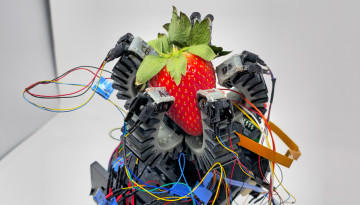
Cornell researchers used stretchable fiber-optic sensors to create a soft robot gripper that can predict the ripeness of strawberries by touch, then pick them without causing any damage.
Kate A. Manne, professor of philosophy, and Leeza Meksin, assistant professor of art, have been named 2026 fellows by the John Simon Guggenheim Memorial Foundation.
The NSF Energy Storage Engine in Upstate New York, an initiative led by Binghamton University with Cornell serving as a core partner for technology translation, has secured $45 million in renewed funding for the next three years.
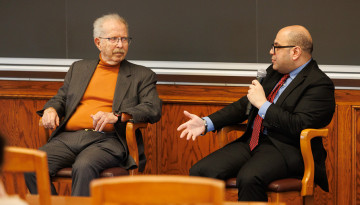
Adjunct professorsMohamed ‘Arafa and Menachem Z. Rosensaft discussed the urgency of discourse between the intertwined communities April 14 at Cornell Law School.
Plants adjust to temperature changes, in part, by switching the way they express Rubisco, the protein that performs the critical first step of photosynthesis, according to new research from Cornell and partners.