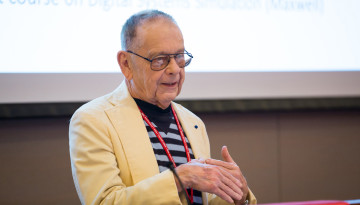
William L. Maxwell ’57, Ph.D. ’61, the Andrew Schultz Jr. Professor Emeritus of Industrial Engineering and a pioneer in the field of simulation and scheduling, died March 31 in Indiana, Pennsylvania. He was 91.
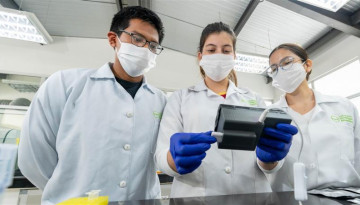
Five next-generation point-of-care technologies have been selected for funding by PORTENT, a Center for Point-of-Care Technologies for Nutrition, Infection, and Cancer at Cornell, focusing on crucial healthcare across the globe.
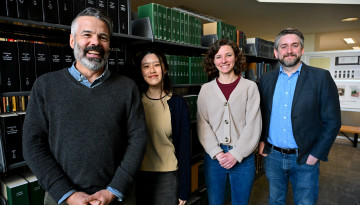
Matt Kibbee is honored for his work on training librarians in evidence synthesis, the art and science of gathering and combining results from multiple studies.
A lecture featuring sociologist Steven Yearley on carbon sinks and climate policy will launch the Trevor Pinch Memorial Lecture Series on April 22 – Earth Day.
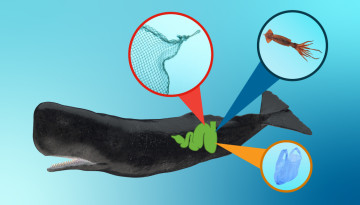
The whales that stranded on southeastern U.S. coastlines between 2020-22 were emaciated and malnourished, with ingested fishing gear and marine debris found in two of them.
Fred Rubinstein ’52, LLB ’55, has honored his late wife’s dedication to civic engagement by endowing a professorship in the Department of Government in the College of Arts and Sciences.
Exostellar, a startup born from Cornell research, has achieved an outcome many entrepreneurs dream of – acquisition by a Fortune 500 company. Qualcomm acquired the eight-year-old company in March.
Three new Cornell University Library exhibits explore the beauty and fragility of Earth’s biodiversity in habitats near and far, from elusive species on other continents to wildlife in our own backyards.
Distinguished Visiting Journalist Keri Blakinger ’14 will host an in-depth look at capital punishment April 23 with a screening of her Oscar-nominated documentary “I Am Ready, Warden” and a faculty panel.