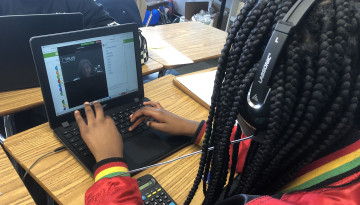
The National Tutoring Observatory is releasing a new app that lets researchers analyze large datasets of text with the help of AI, for learning about effective teaching and other social science questions.
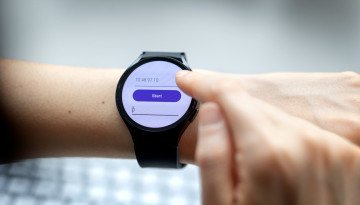
WatchHand, a wearable tech device developed by Cornell Bowers and Korean researchers, equips off-the-shelf smartwatches with AI-powered micro sonar capable of tracking hand movements.
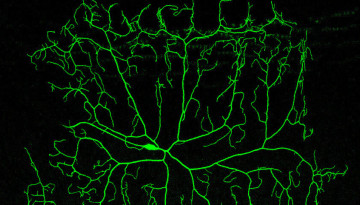
Researchers at Cornell University have developed a powerful new genetic toolkit that allows scientists to study how genes function at the level of individual cells, an advance that could accelerate discoveries in development, neuroscience and disease.
Experts discussed the good, the bad and the unknown ways that GenAI is transforming science at the Assessing and Imagining the Impact of Generative AI on Science Symposium.
Kevin Corinth, senior fellow at the American Enterprise Institute, will give a talk, “Living Standards Across Generations: Are Younger Americans Falling Behind?” April 20 at 5:30 p.m. in 198 Statler Hall.
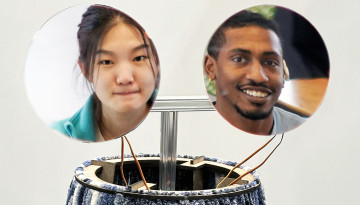
Cornell researchers developed a dual mirror-equipped robot, MirrorBot, that spurred conversations, playful exchanges and other interactions between strangers sparked by initial eye contact made in the mirrors.
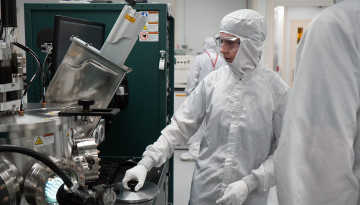
A $9.5 million investment in the Cornell NanoScale Science and Technology Facility from Duffield Engineering will position the facility for its next era of leadership in semiconductor research, education and workforce training.