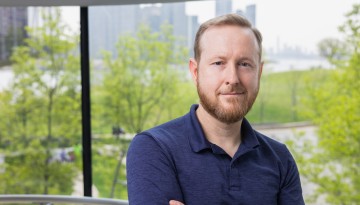
A doctoral student has developed a text message-based system that regularly updates both long-term hospital patients’ and care facilities’ availability statuses, smoothing a normally time-consuming placement process.
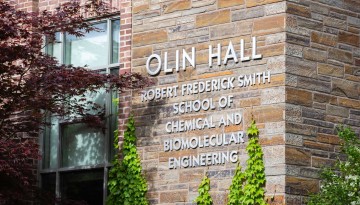
With the support of a Revolutionizing Engineering Departments grant from the National Science Foundation, the R.F. Smith School of Chemical and Biomolecular Engineering will update its undergraduate curriculum, completely overhaul how it is delivered and reshape the school’s culture.
La Pérouse’s expedition, wrecked in 1788, was intended to rival those of British explorer Captain James Cook and to bring the French renown in scientific knowledge. Through the visual materials related to the voyage and its wreck, Kelly Presutti tells a larger story about the enterprise of empire.
New York City’s mostly indoor cats easily caught SARS-CoV-2 during the first wave of the COVID-19 epidemic – and most were asymptomatic and were likely infected by their owners.
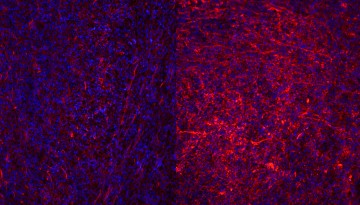
Cellular changes that appear during melanoma and lead to treatment resistance can be reversed with drugs – potentially opening the door to new or more effective treatments for the deadly disease, according to new Cornell research.
Cornell Engineering celebrated its fourth annual EPICC Awards on Oct. 21, recognizing faculty and staff whose work exemplifies the college’s core values of excellence, purpose, innovation, community, and collaboration.
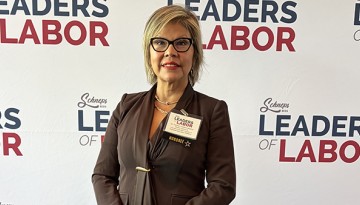
Patricia Campos-Medina ’96, MPA ’97, executive director of ILR’s Worker Institute and senior extension associate, will be honored as a Changemaker Champion by the YWCA of the City of New York on Oct. 22 at the Salute Gala fundraising event.
The next episode of the Startup Cornell podcast features Chi, co-founder of Blackboard and former CEO and co-founder of WeddingWire, which merged with XO Group in 2008 to form The Knot Worldwide.
A Nov. 13 event sponsored by the College of Arts and Sciences will feature reflections on the political and social context and consequences of the COVID epidemic.
Researchers have uncovered molecules that can preserve crucial cellular processes while blocking malignant proteins, indicating a new approach to fighting cancer.