‘Hitting dead ends and rethinking everything’ – BURE summer scholars explore research life

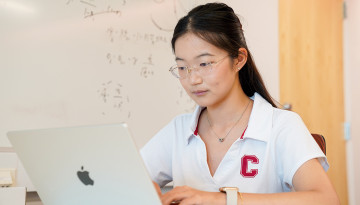
This summer, 60 undergraduates participated in the Bowers Undergraduate Research Experience, a 10-week, paid program where undergraduate students do real-world research alongside Bowers faculty.

Around Cornell

Cornell Cinema unveils Fall 2026 season featuring high school hijinks, film noir

The cinema's fall 2026 season bridges Hollywood spectacle, restored classics, animation and documentary filmmaking.

Around Cornell

Professor, students produce films for Obama Presidential Center

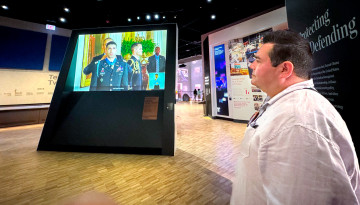
Jeffrey Palmer, associate professor in the Department of Performing and Media Arts, worked with former president Barack Obama and his advisers to create two films for the Obama Presidential Center in Chicago.

Research Matters returns, following ideas from the lab to real life 

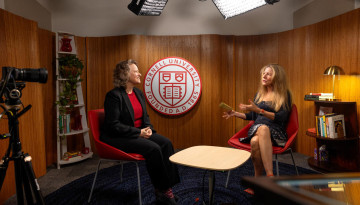
The second season of Research Matters, a Cornell video podcast, drops today, with a way-too-relevant episode on why we don't always do the things we know we should.

Public invited to ‘Friends of Astronomy’ symposium Sept. 17

The astronomy department will host a free public astronomy symposium Sept. 17 featuring expert talks on astrobiology, exoplanets, stellar death and cosmic origins. The event will highlights astronomy research and graduate student discoveries.

Around Cornell

Bunn named provost’s fellow for public engagement

Austin Bunn, professor of performing and media arts in the College of Arts and Sciences, has been appointed provost’s fellow for public engagement. 

Distinct neurons drive mice’s social sounds and squeaks

The discovery is a step toward understanding how the brain is organized to control vocalization in mammals, including humans.

Cell biochemistry beyond membranes: The physics of condensates

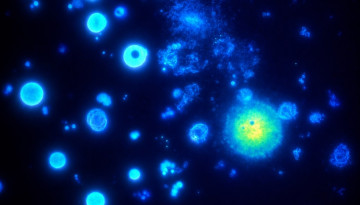
Cornell physics researchers have developed a new framework for studying how biomolecular condensates form and dissolve in cells.

Around Cornell

Attacking cancer-enabling proteins where they live

Using a photochemically driven labeling technique, a Cornell-led research group has devised a way to capture cancer-specific protein-to-protein interactions, which could spawn targeted therapies for prostate and other forms of the disease.