Researchers have identified a site where a commonly used anesthetic binds to sodium ion channels, revealing a molecular mechanism that may explain how these drugs dampen communication between neurons.
An artificial intelligence system that operates like a collaborative team of medical experts could accelerate clinical trial design, one of the most difficult steps in drug development.
Patients with advanced prostate cancer may need periodic imaging scans to catch tumor growth even with stable levels of prostate-specific antigen, a protein in the blood that doctors routinely monitor for cancer progression.
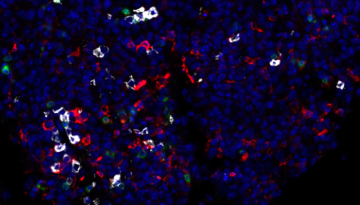
A $13.3 million grant from the NIH will support efforts to reveal how immune cells communicate within living tissues, which could shape new approaches for treating inflammatory diseases, autoimmune disorders and infections.
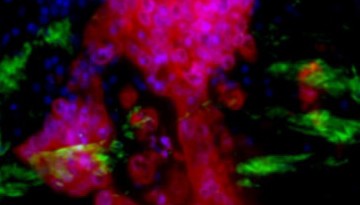
Chronic psychological stress can help tumors evade immune attack through a chain of molecular events involving gut bacteria and viruses within those bacteria.
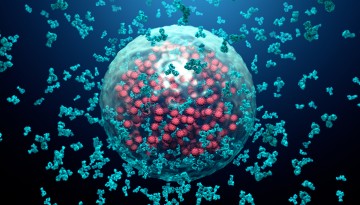
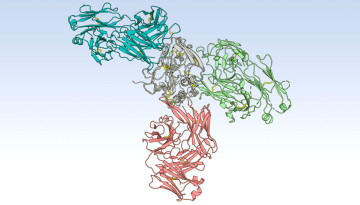
A delivery system that uses lipid nanoparticles to sneak proteins into cells can accomplish the same feat with smuggling therapeutic antibodies, new research has found.
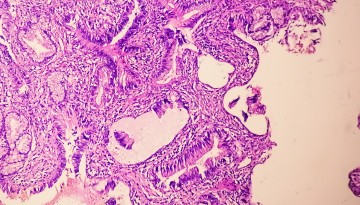
Loss of GATA6 – a transcription factor that controls which genes are turned on or off – can reprogram colorectal cancer cells into more primitive, adaptable states that can then spread to the liver and establish new tumors.
Andrew Flyak, assistant professor in the Department of Microbiology and Immunology in the College of Veterinary Medicine, has been named a 2026 Pew Scholar in the Biomedical Sciences.