In her new book Sara Pritchard, associate professor in the Department of Science and Technology Studies, looks at interdisciplinary collaboration on key questions.
A $10 million grant from the National Institutes of Health has established a new Center for Reproductive Genomics that will connect reproductive scientists across Cornell.
A permanent exhibit of simple black silhouettes of North and South American birds now graces the white north wall of the visitor’s center at the Cornell Lab of Ornithology.
Cornell researchers have discovered five new species of a group of bacteria called Listeria – including one named for Cornell, providing new insights that could lead to better ways to detect the soil bacteria in food.
The first study on vitamin D status and congestive heart failure in dogs suggests the same that vitamin D deficiency may be a risk factor for congestive heart failure in canines.
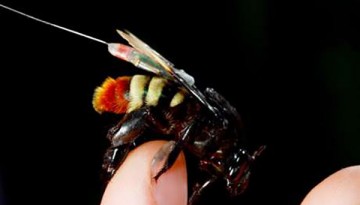
By looking at how past climate changes may have affected orchid bees, Cornell researchers make predictions of how these forest bees might respond to future climate changes.
Robin Davisson looks back on her time at Cornell, and forward to new opportunities, as she and husband Cornell President David Skorton prepare to move in 2015.