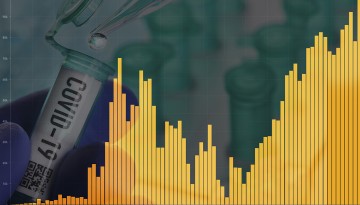
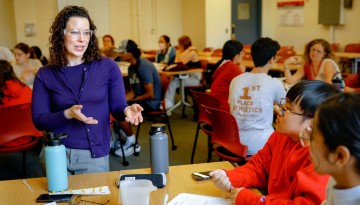
Door-to-door surveillance surveys can provide more precise estimates of how many people are infected with COVID-19 or have immunity to COVID-19 at any given point in time than relying on self-reporting and self-testing, a Cornell-led research group has found.
Fifteen projects by student, faculty and alumni artists from across the university will be featured in the Cornell Council for the Arts’ Freedom of Expression Exhibition, opening March 4 in College of Architecture, Art and Planning galleries as part of the universitywide theme year.
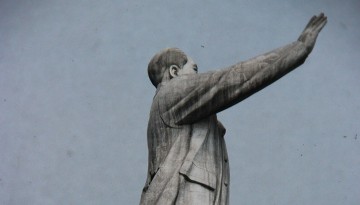
A series of four lectures — two in the spring and two in the fall of 2024 — will focus on “Unmasking the CCP: History, Politics, and Society in Post-1949 China."
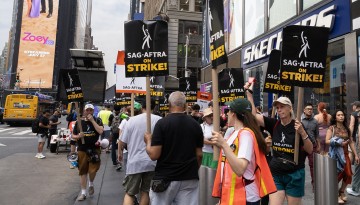
The number of striking workers in the United States, particularly in private-sector industries, more than doubled from 2022 to 2023, according to a report published Feb. 15 by the ILR School.
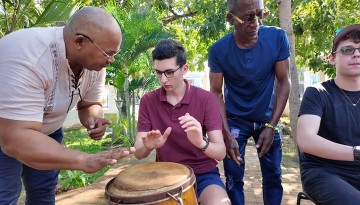
Over winter break, students in Cornell’s Barbara & Richard T. Silver ‘50, MD ‘53 Wind Symphony traveled to Cuba for a community-engaged performance tour in collaboration with the National Concert Band of Cuba. The tour honored both music and culture.
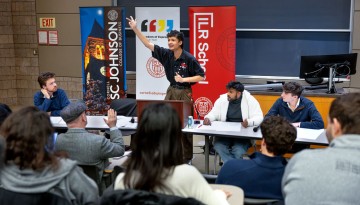
Students sparred over whether promoting freedom of expression in the workplace drives innovation and improves business, or interferes with decision-making and results in gridlock, during a debate and discussion held Feb. 7 in Ives Hall.
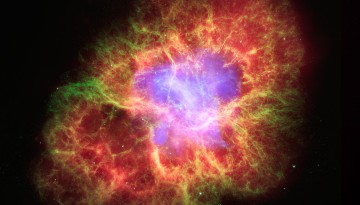
NASA has approved a new mission to survey ultraviolet light across the entire sky, which will enable scientists to probe ever more deeply into how galaxies and stars evolve.
Two faculty members – one studying killer fungi and the other using yeast to find safer painkillers – are winners of Schwartz grants, given annually to female faculty or faculty who enhance the diversity, equity and inclusion goals of the university.
An endowed professorship, made possible with a gift from George Stephen Irwin ’67, M.Eng. ’68, is dedicated to engineering education research. Allison Godwin, associate professor in the Smith School, will be the first to hold the professorship.
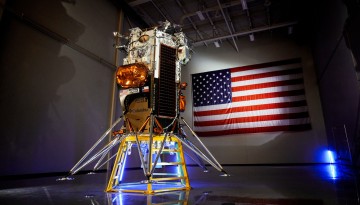
With the help of a Cornell researcher, the first radio telescope ever to land on the moon will lay the foundation for detecting habitable planets in our solar system by observing Earth as if it’s an exoplanet.
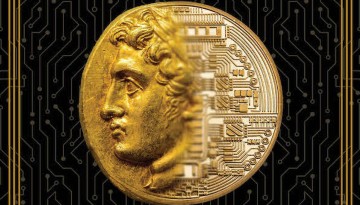
A confluence of events, combined with a healthy obsession for details and a love of writing, gave Cornell Tech computer scientist Ari Juels just what he needed to produce his second fiction thriller, “The Oracle.”
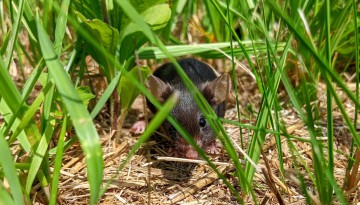
Cornell researchers have found that when laboratory mice are placed in large outdoor enclosures, male behavior was essentially the same as genetically wild mice, but females displayed radically different behaviors.