A research team led by Leslie Lok, assistant professor in the College of Architecture, Art and Planning, relied on mixed-reality technology to design and assemble the installation utilizing salvaged barn wood and hollow-core construction.
Creating healthy financial habits for oneself can be hard. Doing so in a relationship, when a couple shares financial responsibility, is even harder, according to Emily Garbinsky, associate professor of marketing and management at Cornell’s Samuel Curtis Johnson Graduate School of Management.
Motivation in pursuing goals can be an ultimate marker of success, or failure, for many. Research by Kaitlin Woolley, associate professor of marketing and management communication at the Samuel Curtis Johnson Graduate School of Management, highlights what the data tell us about staying motivated when pursuing your goals, whatever they may be.
Teddy was diagnosed with the most common type of cancer for dogs: Lymphoma, a blood cancer that starts in the lymph nodes and can infiltrate any organ in the body, including the eyes.
A new predictive model shows that once political polarization becomes too extreme, people won't be able to unite even in the face of a challenge that threatens society's survival.
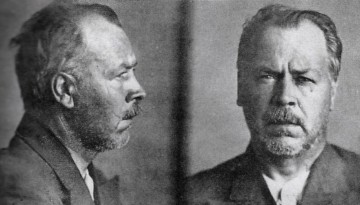
A new Mann Library exhibit, “Cultivating Silence: Nikolai Vavilov and the Suppression of Science in the Modern Era,” pays tribute to pioneering plant scientist Nikolai Vavilov and serves as a reminder of the threat of political censorship and persecution.
Shaheer (Shawn) Haq ‘21, Daniel James II ’22 and Xiaochen (Brian) Ren ‘22 were elected to join the seventh cohort of Schwarzman Scholars, a program that nurtures a network of future global leaders.
Researchers at Weill Cornell Medicine have identified significant differences in the molecular characteristics of tumors from younger and older cancer patients across several cancer types.
Rama Adithya Varanasi, a Ph.D. candidate in the field of information science, spent six months studying hundreds of teachers in rural and urban communities to understand how different aspects of smartphone use and governance were causing significant technology-related stress.
Brooke Erin Duffy, associate professor of communication in the College of Agriculture and Life Sciences, is co-author of “Platforms and Cultural Production,” which explores the processes and implications of platformization in cultural industries.
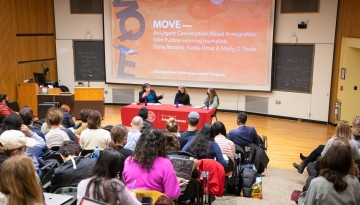
Journalists Sonia Nazario, Nadja Drost and Molly O'Toole shared stories of their work covering immigration and national security during a Dec. 1 on-campus event.