In a major expansion of its commitment to access and lifelong learning, Cornell will launch a part-time, fully online Bachelor of Professional Studies degree program in August 2027.
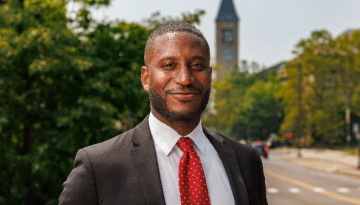
A pair of papers co-authored by ILR Assistant Professor Merrick R. Osborne examines why some diversity, equity and inclusion initiatives succeed while others fall short.
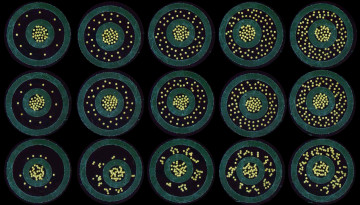
Researchers demonstrated how a swarm of microrobots spinning on a water surface can together generate the fluidic torque needed to manipulate passive structures without any physical contact.
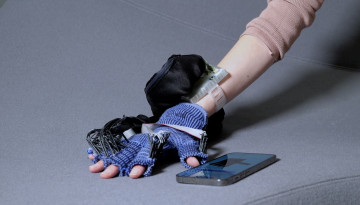
EdemaFlex, a new glove with more than three dozen actuators across all five fingers and the palm, developed by Cornell researchers, aims to reduce swelling for people suffering from edema.
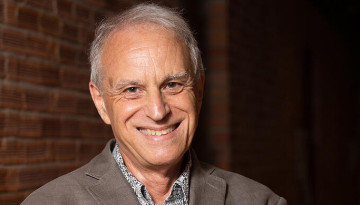
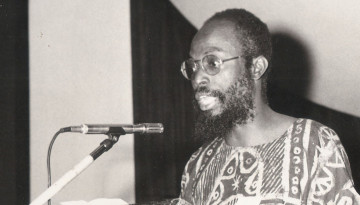
Biodun “BJ” Jeyifo, a leading literary critic and cultural theorist known for his analysis of modernity and its attendant social and cultural crises, died Feb. 11 in Lagos, Nigeria. He was 80.
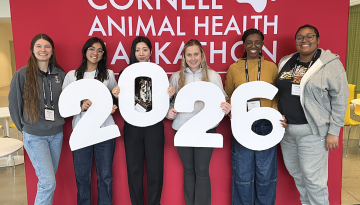
Products to fight ear infections in dogs, a parasite in cattle and animal population control challenges won top honors at the Feb. 20-22 Animal Health Hackathon at the College of Veterinary Medicine.
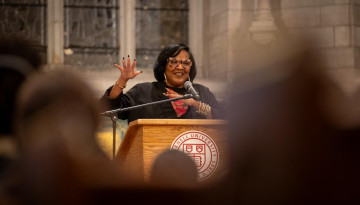
Tricia Hersey, founder of The Nap Ministry, challenged Cornell students and community members to rethink productivity, burnout, and rest during the 2026 Martin Luther King Jr. Commemorative Lecture.
Cornell has earned the Carnegie Community Engagement Classification, a national designation recognizing universities with sustained, mutually beneficial community partnerships.
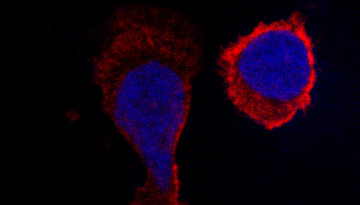
A new study has overcome a long-standing challenge: how to isolate and study elusive HIV-infected cells called authentic reservoir clones that evade the immune system, making the disease difficult to cure.