Seven Cornell research teams have received Center for Advanced Technology grants to advance early-stage life science technologies through collaborations with biotechnology companies across New York state.
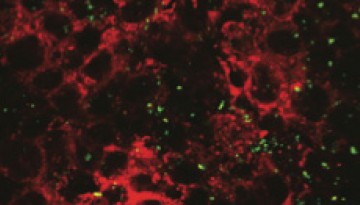
Diet changes and infection resize an organism’s intestines through different cellular strategies. In malnourished fruit flies, infectious microbes became a source of food, not just a threat.
The second season of Research Matters, a Cornell video podcast, drops today, with a way-too-relevant episode on why we don't always do the things we know we should.
Researchers used satellite images to identify 1.8 million trees in New York City, a new approach that could be broadly implemented to increase cooling and improve air quality in cities.
The mixing waters in the Labrador Sea, sandwiched between Greenland and Newfoundland, provides enough oxygen to sustain life throughout the deep North Atlantic Ocean.
The latest study from the Food Systems Countdown Initiative (FSCI) reveals the stark reality of where global food systems transformation stands: For most indicators on health, environment, livelihoods, governance and resilience, a vast majority of countries will not meet the internationally agreed 2030 goals.
The 3,681 first-year students and 603 transfers who begin moving to campus Aug. 17, hail from 49 states plus Washington, D.C., Puerto Rico and American Samoa, and 62 countries.
Through a partnership between Cornell’s School of Continuing Education (SCE) and 4‑H, high school students from across New York state receive scholarships to Cornell’s Precollege Studies program and take Cornell courses for credit on campus or online during the summer.