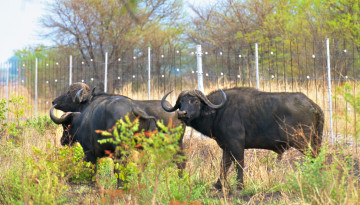
Removing southern African fences may help wildlife, boost economy

Across parts of southern Africa, fences aim to separate cattle from other animals to prevent the spread of diseases, but they also restrict wildlife migrations. 

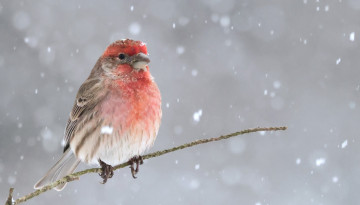
‘Share the joy’: Great Backyard Bird Count begins Feb. 13

The four-day event, co-sponsored by the Cornell Lab of Ornithology, is expected to attract nearly 1 million participants this year, providing a global snapshot just before migration.

Weiss and Provost awards honor outstanding faculty

Seven teaching faculty from across the university have been awarded Cornell’s highest honors for graduate and undergraduate teaching.

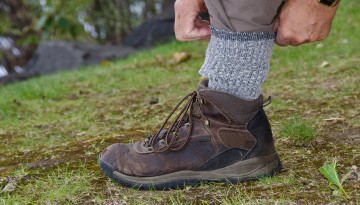
Are we asking the right questions to prevent tick-borne illnesses?

Research on prior surveys finds very few people have been asked why they chose not to take preventative actions.

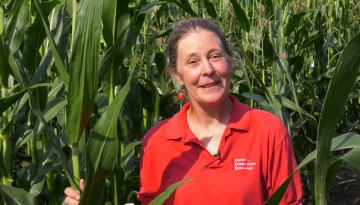
Margaret Smith, "embodiment" of land-grant mission, retires

After almost 50 years at Cornell – from an undergraduate student to a widely respected steward of Cornell’s land grant mission – Margaret Smith has been elected professor emerita.

Around Cornell

Scientists map key oceanic unknowns in climate interventions

Researchers review climate intervention strategies to cut emissions and improve oceanic health.

Around Cornell

Weill Institute welcomes Tara Fischer as newest research member

Fischer investigates how cells detect and repair organelle damage, and how these processes influence inflammation and the progression of neurodegenerative disease. 

Around Cornell

Pressing pause: A small genetic stop with big consequences

Research from the College of Veterinary Medicine explores how a key step in gene regulation – promoter-proximal pausing – evolved across species.

Model reveals tradeoffs that limit harm caused by malaria parasite

A new study based on mathematical modeling reveals how parasites’ choice between using resources to replicate within hosts and transmitting to new mosquito and human hosts might limit their virulence.