Barton, who joined the Cornell faculty in 1951, served as the ninth director of the New York State Agricultural Experiment Station in Geneva – now known as Cornell AgriTech – from 1960 until his retirement in 1982.
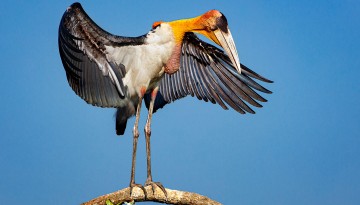
A new film, “Hargila,” illustrates how the greater adjutant stork is slowly being pulled back from the brink of extinction thanks to a community effort inspired by a wildlife biologist in India.
For the Northeastern U.S., the year 2021 was third warmest – at an average of 49.5 degrees, which ties the year 2020 – since 1895, says the Northeast Regional Climate Center.
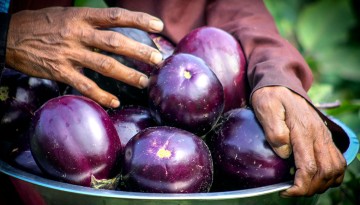
A new Cornell-led project will accelerate the application of a proven biotechnology to enhance food and nutritional security in Bangladesh and the Philippines while protecting the health of farmers and the environment.
A new study finds that despite increasing numbers of bald eagles, poisoning from eating dead carcasses or parts contaminated by lead shot has reduced population growth by 4% to 6% annually in the Northeast.
Professors Neil Lewis Jr. ’13 and Tashara Leak are leading the new Action Research Collaborative, which will serve as an institutional hub for cross-campus action research collaborations between Ithaca and New York City, and elsewhere.
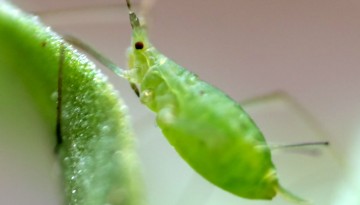
The word ‘honeydew’ sounds benign, but the sugary waste product of aphids can promote growth of bacteria that are highly virulent to the pests, according to a new study.