From teaching food science at the Ithaca Farmers Market to researching how youth feel about their race and ethnicity, this year’s Engaged Faculty Fellows are demonstrating the range of work that’s possible through community-engaged learning and research. The 2021-22 cohorts include 15 faculty from eight Cornell schools and colleges.
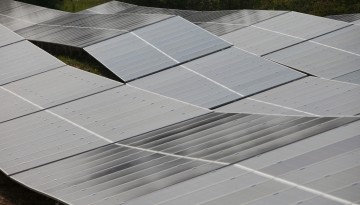
As New York prepares for a carbon-free energy future, public support for utility-scale solar farms is much lower than support for smaller solar projects, says new Cornell research.
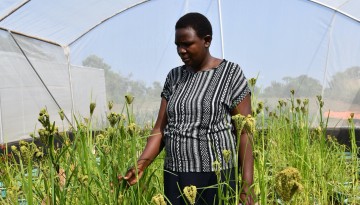
Digital technologies developed by the Innovation Lab for Crop Improvement are helping farmers in Africa combat an agricultural pest that is choking food security across the continent.
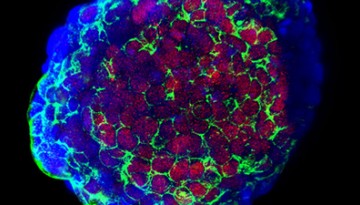
Utilizing a test strip and small reader that return results in minutes, a faculty team’s proof-of-concept test could improve access by enabling more screening in community settings.
The seventh episode of a podcast hosted by Entrepreneurship at Cornell, Startup Cornell, features Laura Ciccone ‘11 and Taly Matiteyahu, co-founders of Blink, a voice-first blind speed dating app that helps people build meaningful connections based on genuine compatibility.
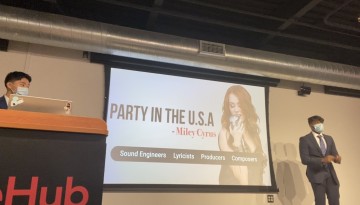
Four teams of undergraduate students were named winners of the Big Ideas Competition at Cornell, with ideas that help musicians connect, detect heart problems, train unemployed young adults and help with pollution issues in developing countries.
Cornell experts from a variety of fields share their recommendations for individual actions – large and small – that can make an impact locally and globally.
A new initiative at the Tata-Cornell Institute for Agriculture and Nutrition (TCI) will chart a path for reducing the greenhouse gas emissions associated with agriculture while meeting the nutritional demands of growing populations.
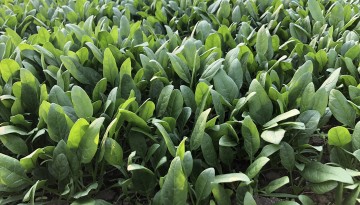
A team of researchers from Boyce Thompson Institute and six Chinese universities has identified genes in spinach that regulate its concentration of oxalate, which is responsible for “spinach teeth,” as well as genes that help the plant combat downy mildew, a major disease of commercial crops.