Fourteen teams of faculty and community partners have received Engaged Research Grants from the Office of Engagement Initiatives to increase undergraduate involvement in research.
Virtual events at Cornell include a Russian conversation series; trainings on racism and allyship; a Congressional Black Caucus panel; a COVID-19 bereavement support group and live Alliance for Science talks.
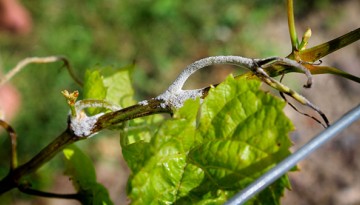
A project led by Kaitlin (Katie) Gold, assistant professor of plant pathology and plant microbe-biology at Cornell AgriTech, to study grape downy mildew has received a $100,000 USDA Specialty Crop Block Grant.
The virtual panel, “One Health: Cornell’s Collaborative Approach to Ensuring Human, Animal and Ecosystem Health in the Time of COVID-19,” was held June 6 as part of Cornell’s Reunion weekend.
Sen. Kirsten Gillibrand told New York farmers that the pandemic has exposed societal faults, including food insecurity and food supply chain weakness, at an online town hall meeting hosted by Cornell.
Kathryn Boor ’80, the Ronald P. Lynch Dean of the College of Agriculture and Life Sciences and a professor of food science, has been named dean of the Graduate School and vice provost for graduate education, Provost Michael Kotlikoff announced June 8.
An analysis of high-speed raindrops hitting biological surfaces such as feathers, plant leaves and insect wings reveals how these highly water-repelling veneers reduce the water’s impact.