Virtual events at Cornell include a lecture on challenges endangering freshwater fish, an conference on worker and community concerns in safely returning to work in New York City, an international linguistics meeting and an introduction to religious and spiritual life on campus.
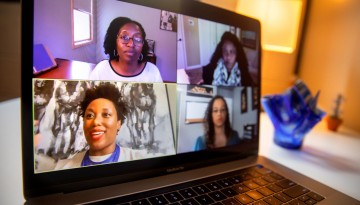
“Systemic Racism and Health Equity,” a webinar hosted July 23 by the Cornell Center for Health Equity, featured insights from three expert panelists and moderator Jamila Michener, associate professor of government and center co-director.
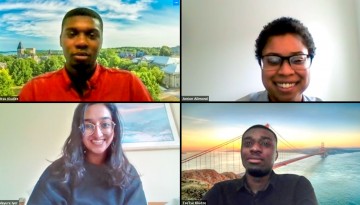
Cornell’s McNair Scholars shared their stories of academic excellence July 21-24, as they paid virtual visits to the offices of U.S. senators and representatives to advocate for more higher-education funding for first-generation and low-income students.
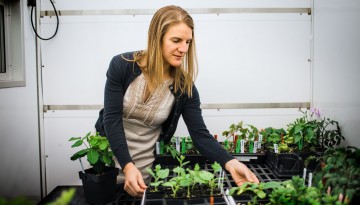
The National Science Foundation recently awarded Margaret Frank, assistant professor of plant biology, a $1.3 million Faculty Early Career Development Program grant for her study of mRNA communication in plants.
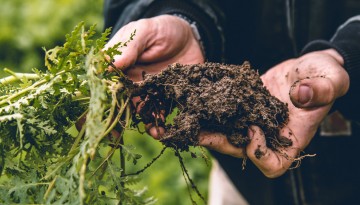
In Nature Geoscience, Cornell’s Johannes Lehmann says that scientists should develop new models that accurately reflect soil carbon-storage processes to draw down atmospheric carbon dioxide.
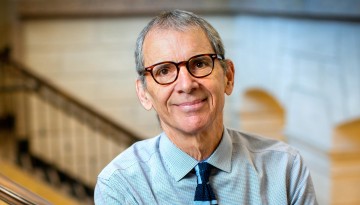
Ed McLaughlin has been tapped again as the interim David J. Nolan Dean of the Charles H. Dyson School of Applied Economics and Management. He began his second stint in the role on July 1.
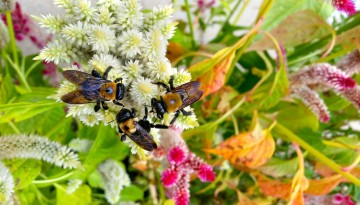
One in 11 flowers carries disease-causing parasites known to contribute to bee declines, according to a Cornell study that identifies how flowers act as hubs for transmitting diseases to bees and other pollinators.