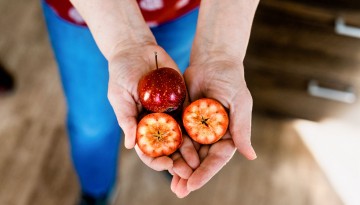
Innovative plant breeders at Cornell’s College of Agriculture and Life Sciences are creating new fruits and vegetables that wow consumers, have longer growing seasons and are more resistant to diseases, insects and weather.
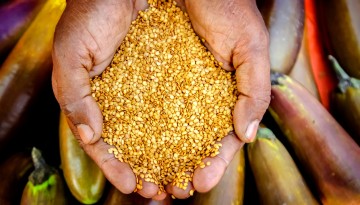
Farmers in Bangladesh achieved significantly higher yields and revenues by growing insect-resistant, genetically engineered eggplant, a new Cornell study has found.
Virtual events at Cornell include a panel on COVID-19's medical and socio-economic impacts in Africa; a play and live Q&A marking the Southeast Asia Program's 70th anniversary; student art on display from New York City and beyond; and a live concert presented by Bound for Glory.
Culminating four years of rigorous military training, five Cornell seniors became officers in the U.S. Navy, and one in the U.S. Marine Corps, in virtual ceremonies May 22. Three more will take the oath May 29.
The Cornell Center for Social Sciences has awarded nearly $110,000 in rapid response grants to help faculty pursue nine research projects related to the COVID-19 pandemic.
One moment, you have a bowl of creamy chocolate liquid. Then, in an instant, it’s ice cream. Forget hocus-pocus: This is physics, engineering and a new Cornell patent.
Ecologist and conservation biologist Amanda Rodewald studies birds and the ecosystems on which they depend, looking for the best outcomes for people and the planet. This approach turned her attention to coffee farms.