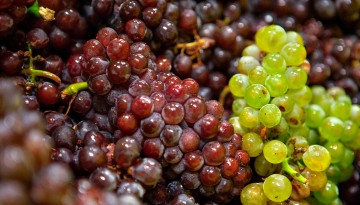
Transferring genetic markers in plant breeding is a challenge, but a team of grapevine breeders and scientists at Cornell AgriTech in Geneva, New York, has come up with a powerful new method.
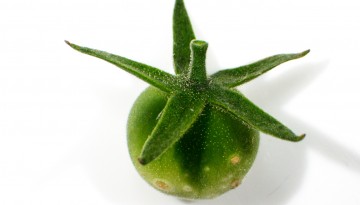
New research from the lab of Christine Smart in the College of Agriculture and Life Sciences shows that wild tomato varieties are less affected by deadly bacterial canker than traditionally cultivated varieties.
David Pimentel, Ph.D. ‘51, professor emeritus of agricultural sciences, entomology and ecology, and an influential champion for the environment, died Dec. 8 in Ithaca. He was 94.
A new collaboration between the Cornell Atkinson Center for Sustainability and The Nature Conservancy this year will fund three studies that could be significant in the face of climate change.
Robert Howarth has been appointed to the new Climate Action Council, created to bring about New York’s path to reach net zero greenhouse gas emissions and support green energy.
Cornell faculty and students can now champion greener consumer products, supply chains and commercial trade, as the Cornell Atkinson Center for Sustainability began a partnership with The Sustainability Consortium on Jan. 13.
Researchers from Boyce Thompson Institute have found that plants manipulate nematode pheromones to repel the pests, which cause more than $100 million in damage to crops every year.
Renerva, a medical startup developing an injectable gel to speed the healing of damaged nerves and creating a nerve-graft product, has joined Cornell’s McGovern Center.
Wendy Wolford, Cornell’s vice provost for international affairs and the Robert A. and Ruth E. Polson Professor of Global Development, discusses her background, interdisciplinary approach, the university’s support for students and faculty in international work, the Global Grand Challenge, the new Cornell China Center and more.