Reggie Fils-Aimé ’83, retired president and COO of Nintendo of America, is returning to Cornell as the inaugural Leader in Residence at the Charles H. Dyson School of Applied Economics and Management.
The Botanic Buzzline, a 380-foot-long, flower-lined pathway developed by students to help pollinating insects navigate fragmented green spaces, opens Sept. 14 in Cornell Botanic Gardens.
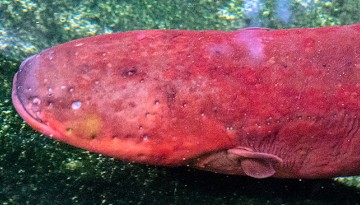
An international team of scientists has discovered two new species of electric eel, one of which delivers 860 volts; the highest level of electricity generated by any living creature.
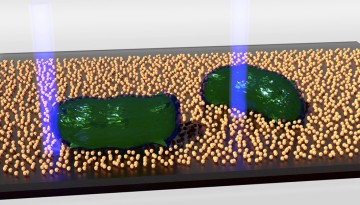
The U.S. Department of Energy has awarded an interdisciplinary team of Cornell researchers $2 million to study the combination of inorganic semiconductor nanoparticles and bacterial cells for more efficient bioenergy conversion.
In the first event of Cornell Botanic Gardens’ Fall Lecture Series, author Kathryn Aalto on Sept. 12 will discuss her book, “The Natural World of Winnie-the-Pooh: A Walk Through the Forest That Inspired the Hundred Acre Wood.”
The drawn-out process for diagnosing Lyme disease could become a thing of the past – good news for the thousands of people each year who get the tick-borne illness.
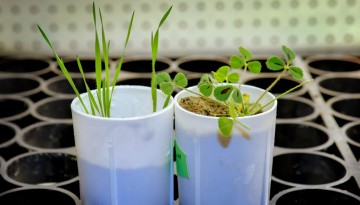
A discovery by Boyce Thompson Institute scientists could help farmers improve phosphate capture, potentially reducing the environmental harm associated with fertilization.
To safeguard the world’s wheat crops, disease-resistance genes must be deployed in an informed way, according to Maricelis Acevedo, adjunct professor in the College of Agriculture and Life Sciences.