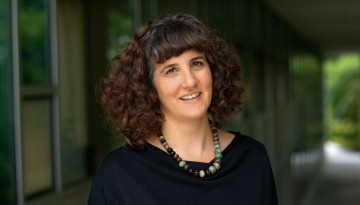
Hale Ann Tufan, adjunct assistant professor in CALS and a leading advocate for gender equality as a central tenet of crop improvement, has won the 2019 Borlaug Award for Field Research and Application.
Cornell is teaming with Purdue University to establish the first Feed the Future Innovation Lab for Food Safety, which aims to solve some of the world’s greatest challenges in agriculture and food insecurity.
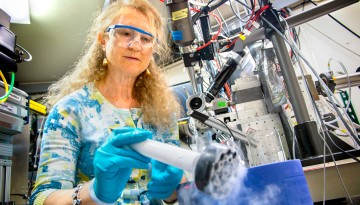
The NIH has awarded Cornell $17.4 million for Macromolecular X-ray science at the Cornell High Energy Synchrotron Source, a subfacility of CHESS specializing in biomedical research.
As methane concentrations increase in the Earth’s atmosphere, chemical fingerprints point to a probable source: shale oil and gas, according to new Cornell research published in Biogeosciences.
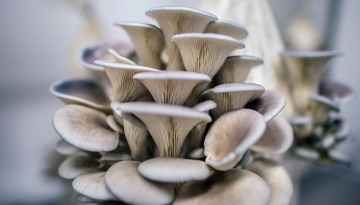
Leep Foods, an upstate New York producer of specialty mushrooms, is working with the Center of Excellence at Cornell AgriTech to develop a blended burger using mushrooms and grass-fed beef.
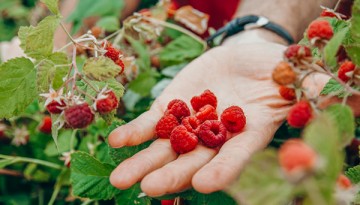
Cornell has the only comprehensive berry team in the Northeast, combining expertise in horticulture, entomology, plant pathology, agricultural economics, berry breeding and management for the benefit of New York state's $20 million berry industry.
Though liberals are more likely than conservatives to believe some groups need help in order to succeed, Americans across the political spectrum believe that effort determines success, Cornell researchers have found.
Cornell and China’s Hebei Qimei Agriculture Science and Technology Co. Ltd., have agreed to collaborate on microbial food safety research, via a $2.5 million grant from the Walmart Foundation.
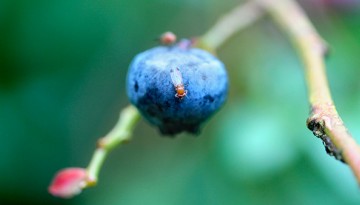
A Cornell study investigates for the first time what spotted-wing drosophila adults and larvae eat, and where they lay their eggs, when short-lived berries, their preferred foods, are not in season.