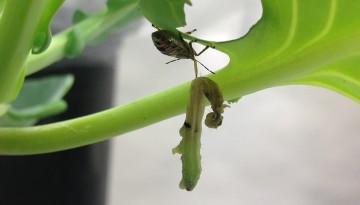
A new study of cabbage crops in New York reports for the first time that the effectiveness of releasing natural enemies to combat pests depends on the landscape surrounding the field.
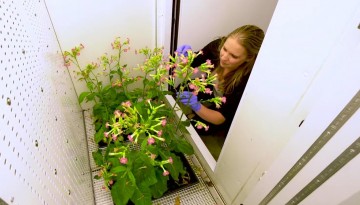
Cornell and University of Illinois researchers have engineered plants capable of making proteins not native to the plant itself, which opens the door for cheaply making proteins for industrial and medical uses.
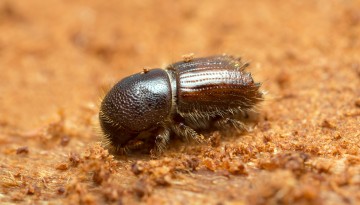
On July 11-12, 10 journalists will descend on The Białowieża Forest, where they are taking part in an audio storytelling workshop, to report on the role climate change is playing in the increasing infestations of bark beetles, a forest pest.
The White House has recognized Cornell faculty members – Thomas Hartman, Jenny Kao-Kniffin, Kin Fai Mak and Rebecca Slayton – with Presidential Early Career Awards for Scientists and Engineers.
Cornell is a regional winner of the 2019 W.K. Kellogg Foundation Community Engagement Scholarship Awards, given by the Association of Public and Land-grant Universities.
Professors Michael Heise and Marty Wells discuss how they collaborate on empirical legal research, applying advanced data science and statistical analyses to look at legal issues that affect people’s lives as well as examining the judiciary system and how it operates.
The Society for Behavioral Neuroendocrinology recently honored professor emerita Elizabeth Adkins-Regan with its Daniel S. Lehrman Lifetime Achievement Award.
The U.S. Department of Agriculture’s National Institute of Food and Agriculture has awarded $1.8 million to two Cornell food science research projects.
Nutrition educators from across New York state joined Cooperative Extension staff and university faculty June 17-18 for a celebration of the 50th anniversary of the Expanded Food and Nutrition Education Program.