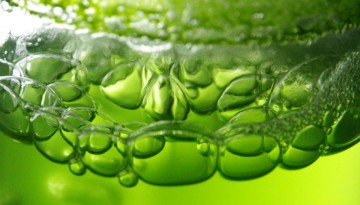
Scientists at Cornell's Baker Institute for Animal Health mimiced the way sperm tail enzymes are attached to a solid support in an attempt to achieve the same efficiency on small man-made devices.
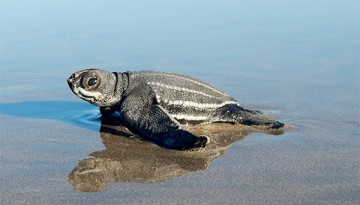
Endangered leatherback sea turtles are known for their open-ocean migratory nature and nomadic foraging habits – traveling thousands of miles. But along the Mozambique coast, sometimes they stay in place.
Daniel G. Sisler, Ph.D. ’62, the Liberty Hyde Bailey Professor Emeritus of Agricultural Economics and a Cornell trustee emeritus, died Nov. 23 in Ithaca. He was 87.
Cornell researchers have developed a chemical tool to control inflammation that is activated by ultraviolet light, which will allow scientists to study inflammation and the immune system.
The Cornell Alliance for Science graduated its 2016 cohort of Global Leadership fellows Nov. 15. The 28 fellows represent 13 nations and three continents.
A Cornell-led team has devised a method for measuring the mechanical force cells exert on their surroundings, which can help scientists design better biomaterial scaffolds for tissue engineering.
Three faculty members - development economist Chris Barrett, mechanical engineer Sidney Leibovich and medical mycologist Dr. Thomas Walsh - have been named fellows of the American Association for the Advancement of Science.
Taken from the bottom of the marine food chain, microalgae may soon become a top-tier contender to combat global warming, climate change and food insecurity, according to Cornell researchers in Oceanography.