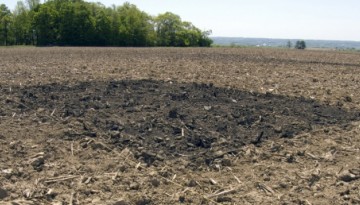
Scientists have begun to account for the topsy-turvy carbon cycle of the Colorado River delta – once a massive green estuary of grassland, marshes and cottonwood, now desiccated dead land.
Cornell and UC Davis researchers have begun to reckon the marine ecosystem devastation of the Salish Sea – north of Seattle – caused by a disease that led to the disappearance of once-abundant sunflower sea stars.
New Cornell research suggests an economically viable model to scrub carbon dioxide from the atmosphere to thwart runaway, point-of-no-return global warming.
Cornell is leading a national alliance aimed at improving the safety of fresh produce and helping fruit and vegetable growers meet new regulatory requirements of the Food Safety Modernization Act.
Robert Howarth spoke to the University Assembly Oct. 18 about the recently released Senior Leaders Climate Action Group report on options and their associated costs for achieving a carbon-neutral campus by 2035.
The Frank H.T. Rhodes Symposium will celebrate the emeritus president's 90th birthday by bringing two noted scholars to discuss his contributions to paleontology and Darwin studies.