Cornell experts issued a report this week outlining the opportunities and challenges facing the state's farmers and food producers as emerging digital technologies shape the agricultural industry.
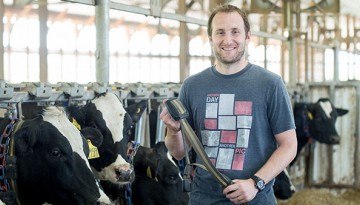
Collars with tags that carry an accelerometer – the same technology used in Fitbits for people – are effective non-invasive tools for tracking the health of dairy cows.
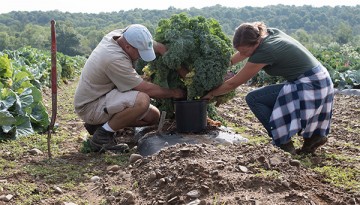
A Cornell breeding program is targeting the natural biodiversity of kale to further promote its acceptability and popularity as a leafy green vegetable among consumers.
The willingness to make lifestyle changes to avert climate change may depend on the moral values closely aligned with liberal political leanings, according to Cornell research.
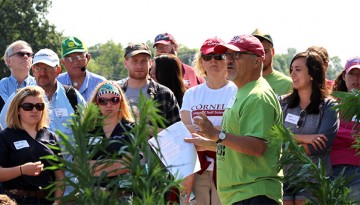
Farmers looking to reduce reliance on pesticides, herbicides and other pest management tools may want to heed the advice of Cornell agricultural scientists: Let nature be nature – to a degree.
In a presentation to global leaders battling climate change and feeding a burgeoning world population, Cornell's Dawit Solomon presented food security ideas to stave off the Earth's atmospheric warming.
A project led by Cornell researchers to better understand soil microbes and their role in the carbon cycle has received a three-year, $3.59 million grant from the U.S. Department of Energy.