Holding children back a year from entering kindergarten has no impact on their ultimate performance in graduate school, and could lead to a loss in income, researchers Kevin Kniffin and Drew Hanks find.
Two upcoming EnoCert courses for winery employees will be offered Aug. 4 (EnoCert 203 Winery Sanitation and Safety) and Aug. 5 (EnoCert 202 Tasting Room Sales Strategies).
A new discovery finds that when plants detect pheromones given off by nematode worms, the chemical warning triggers defenses against bacterial, fungal and viral infection.
Sociologist Tom Hirschl says poverty may be best understood in a relative sense – that is, looking at how people stack up against each other, as opposed to against a specific income standard.
A new study by the Cornell Food and Brand Lab describes a surprising yet reliable source for predicting obesity rates three years in advance: national news stories.
In the war to keep food safe from bacteria, Cornell food scientists examine a class of weaponry called bacteriophages – an all-natural biological enemy for Listeria.
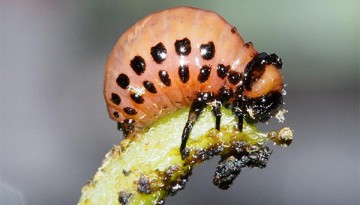
A novel insecticide targets a specific gene in a pest, killing only that bug species on crops and avoiding collateral damage to beneficial insects caused by today’s pesticides.
A new study published in BMC Biology describes greenhouse trials of a genetically engineered diamondback moth that suppresses populations of pest diamondback moths and reduces their resistance to Bt.