A diverse group of researchers received a five-year, $10 million United States Department of Agriculture (USDA) Specialty Crop Research Initiative grant to find a solution to citrus greening disease.
At Mann Library's Harvesting Heritage event June 5, researchers and home gardeners learned about efforts to preserve ancient traits in the tomato and Cornell's collection of historical seed.
Ways to address major social problems among youth were discussed at the Bronfenbrenner Center for Translational Research's fifth Youth Development Research Update, June 2-3 in Ithaca.
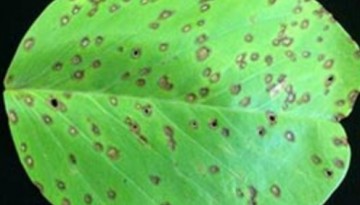
Leaf Doctor analyzes a photograph of a damaged leaf and quantifies the percentage and severity of disease, an important measure for researchers and extension agents in the field.
In a breakthrough for computer vision and for bird-watching, researchers and bird enthusiasts have enabled computers to achieve a task that stumps most humans - identifying hundreds of bird species pictured in photos.
David Atkinson '60 has announced that he and his wife, Patricia, have endowed the Francis J. DiSalvo Director of the Atkinson Center in honor of the retiring director Frank DiSalvo.
Cornell and the Smithsonian Institution are expanding their collaboration to conserve endangered species, advise foreign governments on sustainable development and develop protocols to archive biological collections.
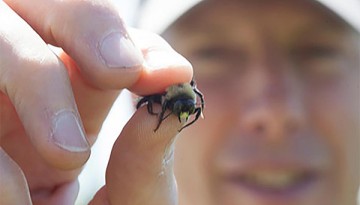
Researchers and farm managers at Cornell orchards decided to let wild bees, rather than honeybees, pollinate Cornell's apples this year - a gamble that seems to have paid off.
A new Cornell study of New York state apple orchards finds that pesticides cause harm to wild bees, and fungicides labeled "safe for bees" may indirectly also threaten native pollinators.