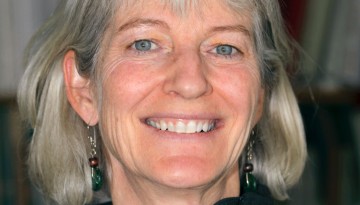
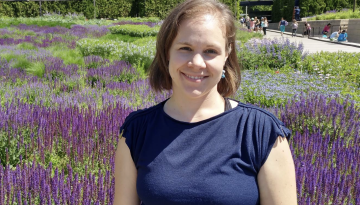
Drew Harvell, professor emerita of ecology and evolutionary biology who studies sustainable marine biodiversity, is one of seven U.S. researchers named 2023 U.S. Science Envoys by the Department of State.
President Martha E. Pollack has established a task force to interrogate all aspects of the undergraduate admissions process and to recommend a universitywide admissions policy and best practices that will be guided by Cornell’s founding mission and can be adapted by the admissions offices of each school and college.
Unrelenting climate change is leading to extended, late-summer weeks of water stratification, which prompts varying degrees of oxygen deprivation in lakes, says new Cornell research.
Researchers from the Department of Communication state that at the current rate of diversification, U.S. colleges and universities will never achieve racial parity that’s on par with the rest of the country, but that steps can be taken to make it happen.
Researchers from Boyce Thompson Institute and Cornell have identified genes that could help plant breeders develop drought-resistant fruit, through a study that provided the first-ever comprehensive picture of how a fruit’s gene expression changes in response to water stress.
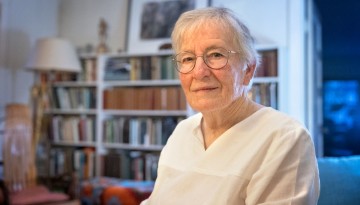
Philanthropist K. Lisa Yang ’74 has endowed $1.5 million to establish the Katharine B. Payne Fellows Program in Conservation Bioacoustics in honor of Katy Payne ’59, a pioneer in the burgeoning science of bioacoustics.
Sustainable Animal Husbandry, a three-credit course taught by Melanie Soberon at Cornell’s College of Veterinary Medicine, will be offered online during Winter Session 2023. The course is a way for high schoolers interested in veterinary or animal science to understand what it would be like to pursue those studies at college or what a career in those fields would be like.
In an international, multi-institutional effort, Cornell’s Food Science Department will research how to increase iron and zinc absorption, thanks to a Bill & Melinda Gates Foundation grant.
The 12th annual Cornell Town-Gown Awards – also known as the TOGOs – celebrated cooperation between the university and the greater Ithaca community at a virtual ceremony held Nov. 19.