At the upcoming Conference of the Parties – best known as COP27 – 11 Cornell students will help delegations from small countries gain a stronger environmental voice.
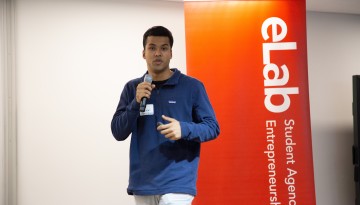
The Eclectic Convergence conference included talks from six entrepreneurs, business executives and venture capitalists, as well as a pitch competition.
Viral DNA in human genomes, embedded there from ancient infections, serve as antivirals that protect human cells against certain present-day viruses, according to new research.
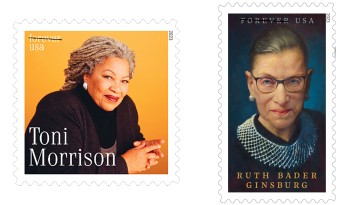
Two Cornell icons woven into the fabric of American history – Nobel laureate Toni Morrison and Supreme Court Justice Ruth Bader Ginsburg – will be commemorated in 2023 with a U.S. postage stamp.
The fourth annual Grow-NY Summit will bring food and ag startups and industry players together at the Syracuse Oncenter on Nov. 15-16, spotlighting the spaces where farms and food, innovation and sustainability overlap.
Cornell has been selected to join the Schmidt AI in Science Postdoctoral Fellowship, a program of Schmidt Futures, to accelerate the next scientific revolution by applying artificial intelligence to research in science, technology, engineering and mathematics.
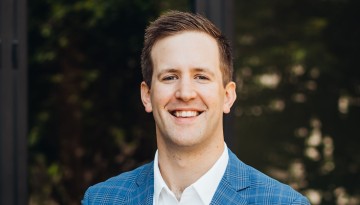
Jared Buono, executive director for Cornell Cooperative Extension of Ulster County, has been named director of the Cornell Hudson Valley Research Laboratory in Highland, New York.