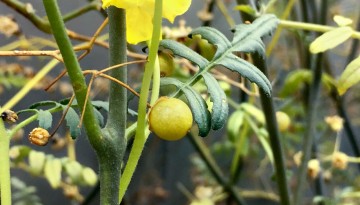
A team of researchers has assembled a reference genome for Solanum lycopersicoides, a wild relative of the cultivated tomato, and developed web-based tools to help plant researchers and breeders improve the crop.
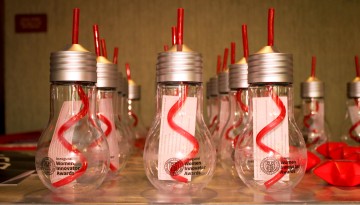
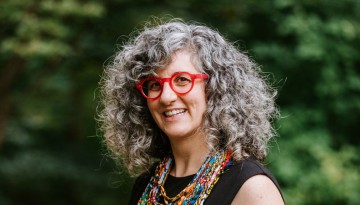
Three Cornell scientists were honored during a June 1 ceremony promoting women’s engagement in innovation and commercialization – part of Cornell’s efforts to elevate women inventors, who were awarded just 12.8% of all U.S. patents in 2019.
Social justice and engineering blend beautifully. Last semester, Cornell students built a trailblazing food-sharing pantry to take an edge off chronic hunger among local residents.
Farmers can tailor their efforts to control weeds more effectively by pinpointing when a particular weed will emerge, according to a new Cornell study.
The National Science Foundation has awarded Cornell $2 million to oversee the first federally funded midterm election survey in 20 years, engaging multiple partners and diverse methodologies.
Benjamin Z. Houlton, the Ronald P. Lynch Dean of the College of Agriculture and Life Sciences, testified June 15 to the U.S. House Agriculture Committee on the role of climate research in supporting agricultural resiliency.
At NextGen Cassava, together with partners IITA and NRCRI in Nigeria, TARI in Tanzania and NaCRRI in Uganda, Tufan and the Survey Division team are breaking down research silos by integrating data sets between plant breeders, economists and gender specialists.
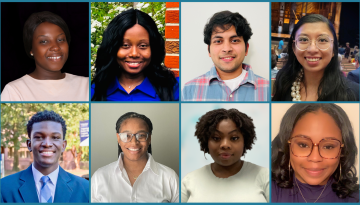
Eight graduate students from 1890 land grant institutions across the United States have been selected as part of the inaugural cohort of Thomas Wyatt Turner Fellows at Cornell University.
Terry Tucker, Ph.D. ‘98 earned the 2022 SUNY Chancellor's Award for Excellence in Teaching in recognition of innovative instruction that brought global education to generations of students at Cornell and beyond.