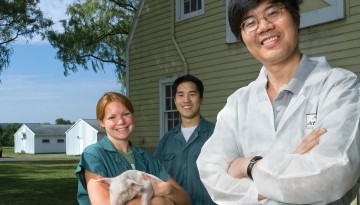
Animal Science Professor Xingen Lei has been named a Fellow of the National Academy of Inventors, in recognition of his groundbreaking work on livestock phosphorus nutrition that improves global animal agriculture, preserves non-renewable phosphorus, and protects the environment.
The new Bouriez Family Fellowship sponsors graduate students from French-speaking Africa as they pursue professional training in law or global development at Cornell. The fellowship is administered by the Einaudi Center's Institute for African Development.
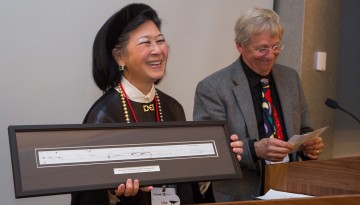
A new $1.5 million gift from philanthropist K. Lisa Yang ’74 has established the Christopher W. Clark Postdoctoral Fellowship in Conservation Bioacoustics in honor of Clark, the retired director of the bioacoustics program at the Cornell Lab of Ornithology.
Around 1,450 Cornell students completed their studies this month. While the December Recognition Ceremony was canceled, some shared their university experiences.
Students have flocked to Cornell AgriTech’s hard apple cider online training with 236 cider producers from around the world taking part since the pandemic forced a change in format.
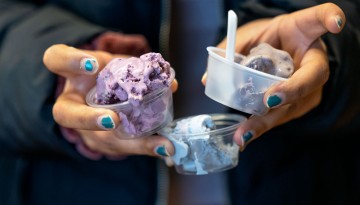
Pining for ice cream? This campy mix of graham cracker swirl, fudge, toasted marshmallow flavor and berries, has won top honors in a food science class annual competition.
This is the second in a series of stories detailing actions CALS students, faculty and staff have taken over the past year to make our community a more diverse, equitable and inclusive place for everyone. Here, we…