Small-scale farmers see a path to solving global hunger over the next decade, thanks to a Cornell-hosted project that used artificial intelligence to cull ideas from more than 500,000 scientific research articles.
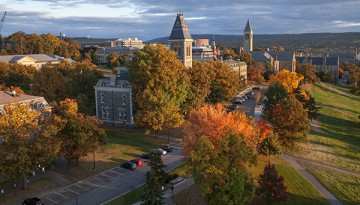
A committee formed by the American Indian and Indigenous Studies Program is exploring Cornell’s history as a land-grant institution and the nation’s dispossession of Indigenous peoples.
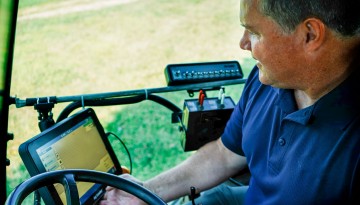
A $676,000 grant from the U.S. Department of Agriculture’s National Institute of Food and Agriculture will help Cornell researchers, who are using high-resolution sensors to help vineyard growers identify nutrient deficiencies.
Three New York state companies have been chosen to participate in the Cornell Center for Materials Research JumpStart Program, through which they will collaborate with faculty members to develop and improve their products.
A $2 million grant from the National Science Foundation will fund research, led by Nicholas Abbott from the Smith School of Chemical and Biomolecular Engineering, into “microcleaners” for waterways.
Shu-Bing Qian, a professor of molecular nutrition whose work explores how genetic information gets translated in order to make proteins in cells, has won a National Institutes of Health Director’s Pioneer Award.
Seven postdoctoral researchers at Cornell were honored with a Postdoc Achievement Award as part of Cornell’s celebration of National Postdoc Appreciation Week, Sept. 21-25.
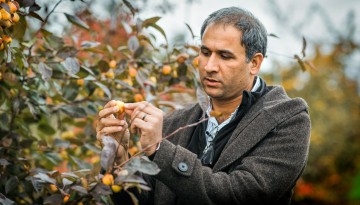
A $779,000 grant from the U.S. Department of Agriculture’s National Institute of Food Agriculture will help Cornell researchers prevent fire blight disease in apples and pears before it starts.
Graduate students in six fields of study have designed an evolution lesson on speciation for undergraduate non-majors that applies active-learning techniques. The lesson was published in CourseSource.