Warren Knapp, 82, professor emeritus of meteorology and climate in the Earth and atmospheric sciences, and the second director of Cornell’s Northeast Regional Climate Center, died Oct. 3 in Ithaca.
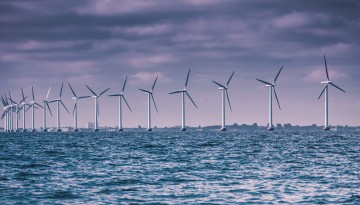
An analysis of Denmark’s wind industry offers lessons for policymakers seeking to increase renewable electricity production with limited budgets, according to Cynthia Lin Lawell.
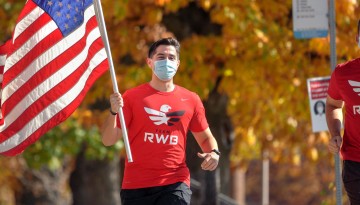
Cornell continues to build a community that welcomes veterans to the university, based on an array of programs and resources that proactively address their needs and draw on their strengths and experiences.
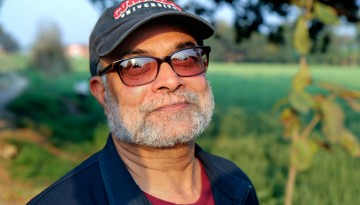
Prabhu Pingali, director of the Tata-Cornell Institute for Agriculture and Nutrition, has been named chair of the governing board of the International Crops Research Institute for the Semi-Arid Tropics.
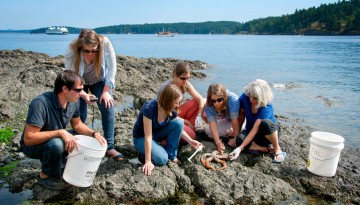
A paper on safety issues for scientists doing fieldwork describes how peers, mentors, departments and institutions can all help to address these problems.
The Cornell Atkinson Center for Sustainability is celebrating its 10th anniversary by focusing with renewed urgency on more powerful ways to translate knowledge into action.
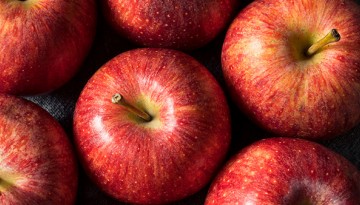
The fabled Silk Road is responsible for one of our favorite and most valuable fruits: the domesticated apple. Researchers have now assembled complete reference genomes and pan-genomes for the apple and its two main wild progenitors.
Amid the clatter in the days before the presidential election, three professors in the College of Arts and Sciences offered a bright light at the end of the 2020 tunnel: hope for democracy.
After learning the theory and methodology behind public opinion polls, undergraduates in “Taking America’s Pulse” surveyed a nationally representative sample of more than 1,100 Americans on a wide range of topics.